
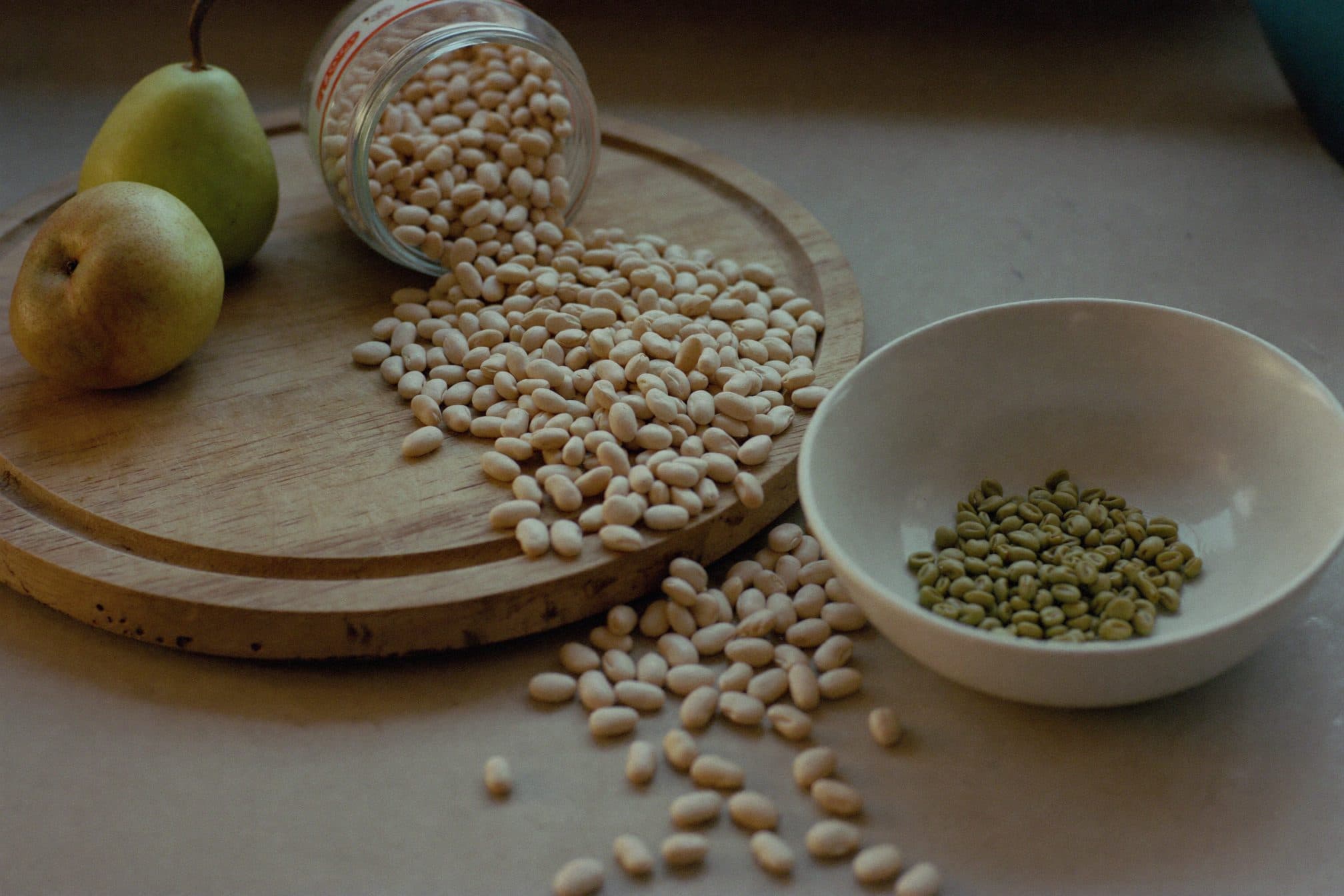
Fiber is the quiet lever. In a 185-study Lancet analysis, the highest-fiber diets tracked with 15–30% lower all-cause mortality and heart-disease risk. The benefit was greatest around 25–29 g a day, and dose-response curves suggest more could help further. Most US adults average 15–18 g. Beans, peas, lentils, fruit, and popcorn close the gap for pocket change — the same cheap aisles behind the Sunday meal-prep session.
01What does fiber actually do?
Across 185 prospective studies, the highest-fiber eaters showed 15–30% lower all-cause and cardiovascular mortality [1].
Strip away the gut-health branding and fiber's case is mortality tables. The Lancet pooled just under 135 million person-years — one person followed for one year, 135 million times over — from 185 prospective studies plus 58 clinical trials [1]. The highest-fiber eaters carried 15–30% lower all-cause and cardiovascular mortality than the lowest [1]. They also carried lower rates of coronary heart disease, stroke, type 2 diabetes, and colorectal cancer [1].
The honest asterisk: those mortality numbers are observational — researchers watched what people ate, and high-fiber eaters differ in other ways too. But the randomized trials in the same analysis moved real markers: bodyweight, systolic blood pressure, and total cholesterol all came in lower [1]. And the dose-response evidence — more fiber, more benefit, the way a dimmer brightens as it turns — struck the authors as strong enough that the relationships could be causal [1]. Strong words, carefully earned.
02How much fiber do most adults actually eat?
US men average 18.1 g a day and women 15.1 g — roughly half to two-thirds of the reference intakes [2].
Against that, the national ledger. American men average 18.1 g a day; women, 15.1 g [2]. The adequate-intake reference is 38 g for men under 50 and 25 g for women under 50 [2]. Most adults are running at roughly half to two-thirds of target. Measured per 1,000 calories, the US diet carries 8.1 g against the recommended 14 g — 58% of the way there [3].
Only 4% of men and 11% of women clear their reference intake [2]. That makes fiber the rare health gap with no controversy at either end — everyone agrees on the direction, and almost nobody is standing at the destination.
By signing up you agree to receive our emails, including occasional offers, and to the privacy policy.
03Where does the 30-gram target come from?
30 g clears the label's 28 g daily value, sits inside the Lancet's 25–29 g band, and scales with your calories [1][3][4].
Three separate systems point at the same neighborhood. The Lancet analysis found risk reduction greatest between 25 and 29 g a day [1]. Its dose-response curves suggest higher intakes help further [1]. The Dietary Guidelines set the bar at 14 g per 1,000 calories [3] — about 28 g on a 2,000-calorie day. The nutrition label's daily value is 28 g [4]. The men's adequate-intake reference sits higher still, at 38 g [2].
So 30 isn't magic — it's a round number sitting above the label value, inside the meta-analysis band, and honestly short of the men's reference. Eat more than 2,000 calories, and 14 g per 1,000 scales the target with you [3]. Start at 30. Count in foods, not percentages.
04What's the cheapest way to hit 30 grams?
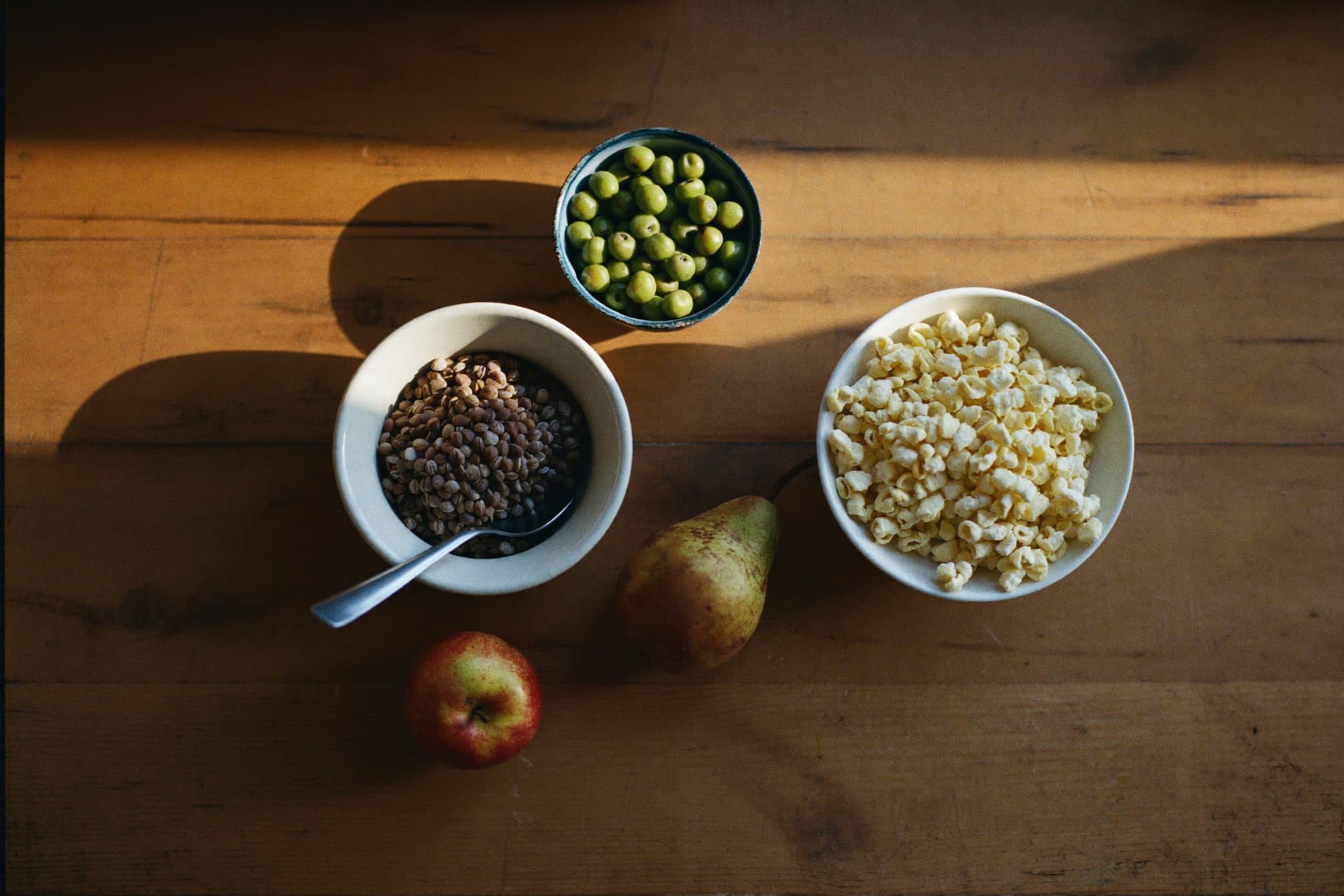
Beans, peas, lentils, fruit, and popcorn close the gap for pocket change — one plain day stacks 30.1 g [5].
The cheap aisles are the high-fiber aisles: dried or canned beans, frozen vegetables, oats, whole fruit, popcorn. No powders, no branded gut kits — the ledger below is the whole strategy, in grams per portion from the USDA's own table [5]. We sell nothing; the bean aisle doesn't need our help. It's the same aisle that anchors protein math for twice-a-week cooks.
One boring day that clears the bar: oat bran at breakfast (2.9), an apple (4.8), lentils folded into dinner (7.8), a cup of peas on the side (8.8), popcorn with the movie (5.8) — 30.1 g before counting anything else you ate that day [5]. The freezer bag and the can are the budget route to the same cooked cup — and they survive the worst week, outlasting the sick-kid night that wrecks the produce drawer.
And ramp. Add a line or two from the table each week, not the whole thing on Monday — 30 g is a destination, not a dare. More levers this cheap live on the rest of the nutrition shelf.
Does fiber help with weight loss?
Do fiber supplements work as well as food?
How do I read fiber on a nutrition label?
General-audience information — not medical advice. How we source and verify. No affiliate links in this breakdown. Last updated 2026-09-05.
Protein math for people who cook twice a week
The daily target, split across meals you'll actually eat. Plain numbers, no powder required.
4 min · September 5, 2026NutritionThe 90-minute meal prep
One Sunday session, five weekday lunches, 35–45 g of protein in every container. The math, the timeline, and the honest food-safety fine print.
5 min · September 5, 2026