
Most adults who train aim for about 0.7 g of protein per pound of bodyweight per day — roughly 125 g at 180 lb. Cook twice a week, anchor two meals a day at 40 g each, and cover the rest with no-cook add-ons.
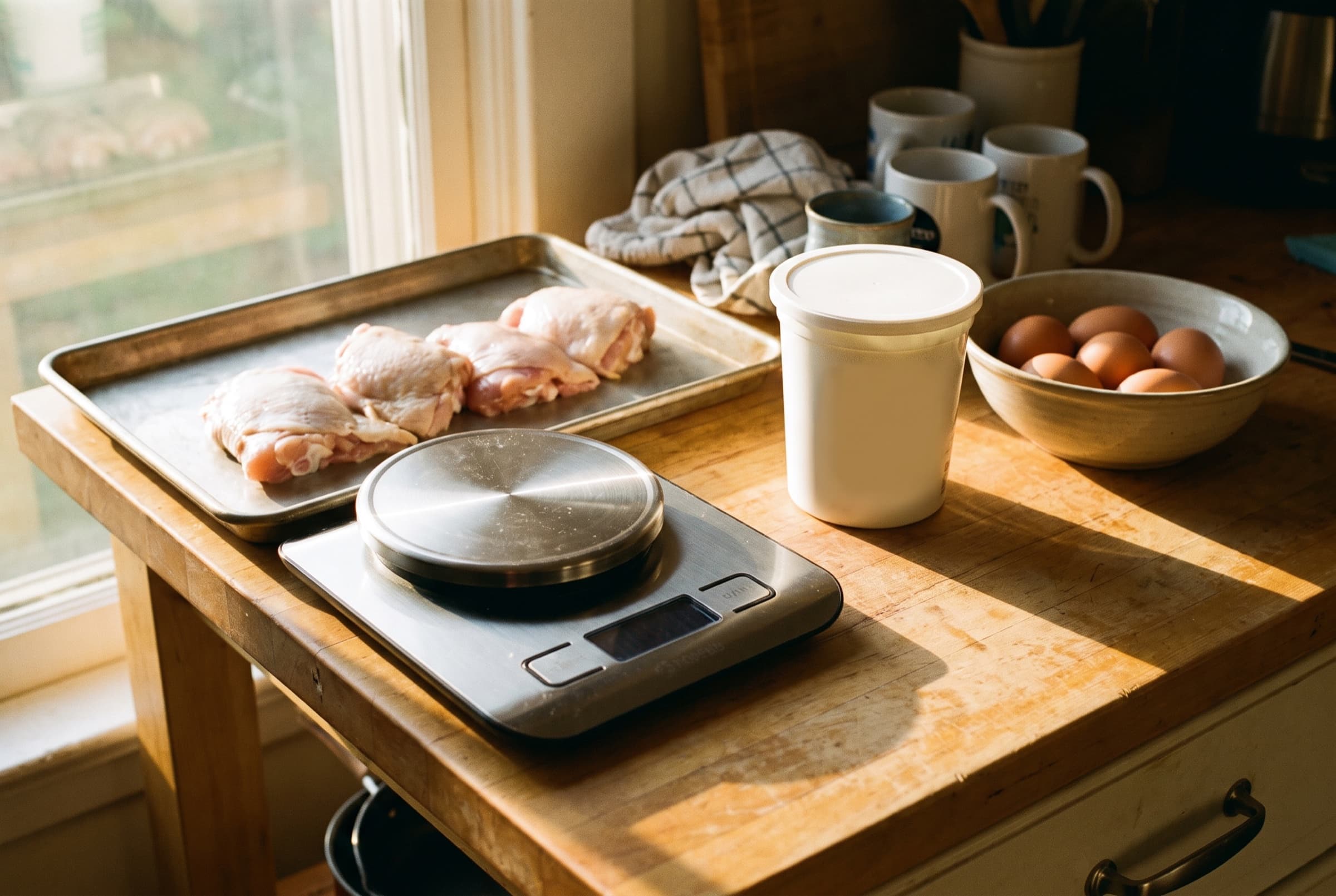
01How much protein do you actually need?
About 0.7 g per pound per day — 1.6 g/kg — is where measurable muscle-gain benefits plateau for people who train [1].
For people who train 3–5 days a week, benefits plateau around 1.6 g/kg per day — about 0.7 g per pound. More isn't harmful for healthy adults; it's just mostly unnecessary. Under 0.5 g per pound while training is where progress quietly stalls. If lunch is where you'd anchor a meal, the 40-gram lunch, built three ways prices one at a fast-casual counter.
Per meal, the useful ceiling is around 0.4 g/kg — call it 30–45 g for most people. That's why the two-anchor system below works: two big meals get you two-thirds of the way there [2].
02The two-cook system
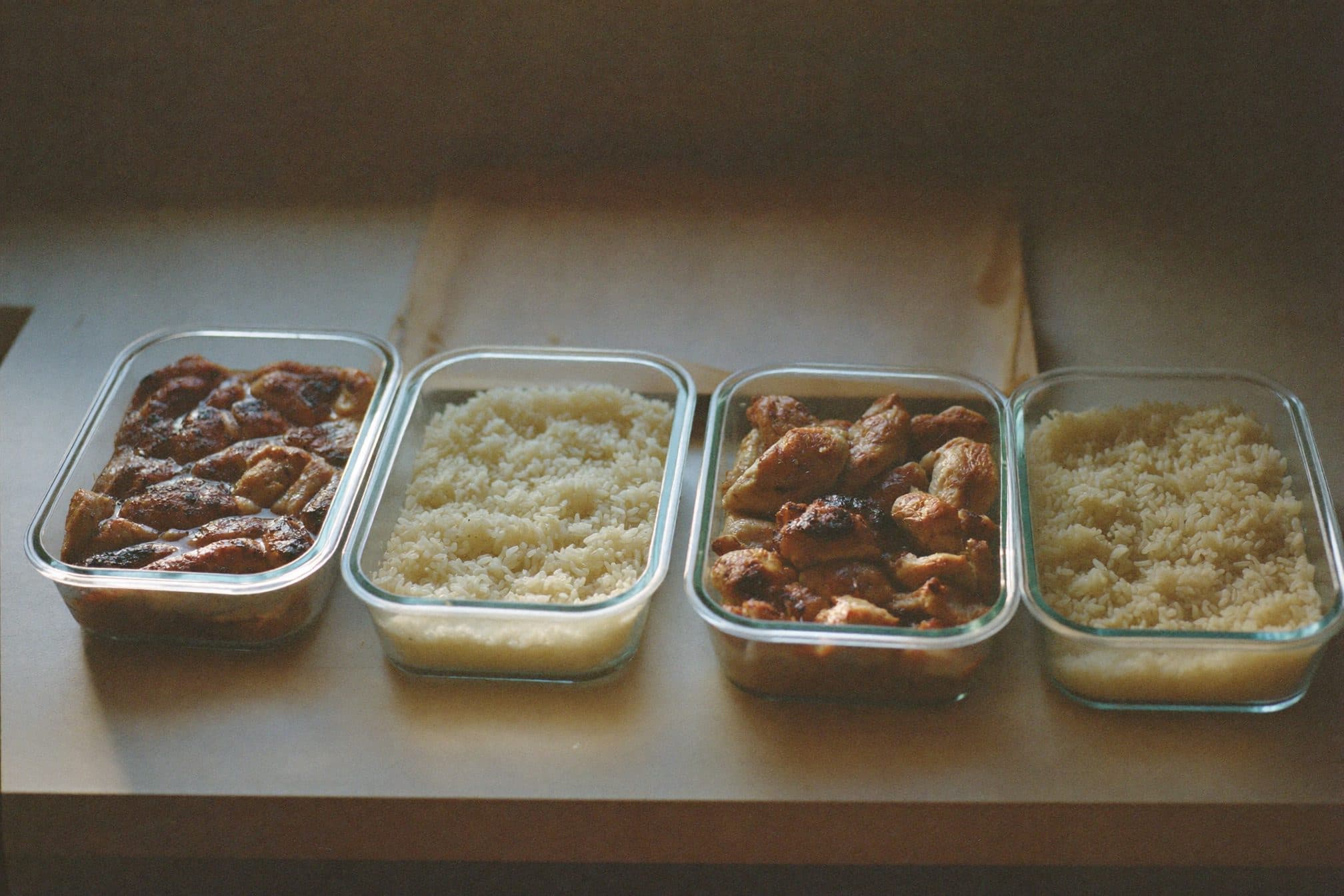
Two 40-minute cooks a week produce eight 40 g anchor meals — two a day gets you two-thirds of a 125 g target.
Cook twice — Sunday and Wednesday, 40 minutes each. Each cook produces four anchor meals at 40 g protein. That's eight anchors across the week; everything else is assembly, not cooking. It's the anchor logic the rest of the nutrition breakdowns keep pointing back to.
By signing up you agree to receive our emails, including occasional offers, and to the privacy policy.
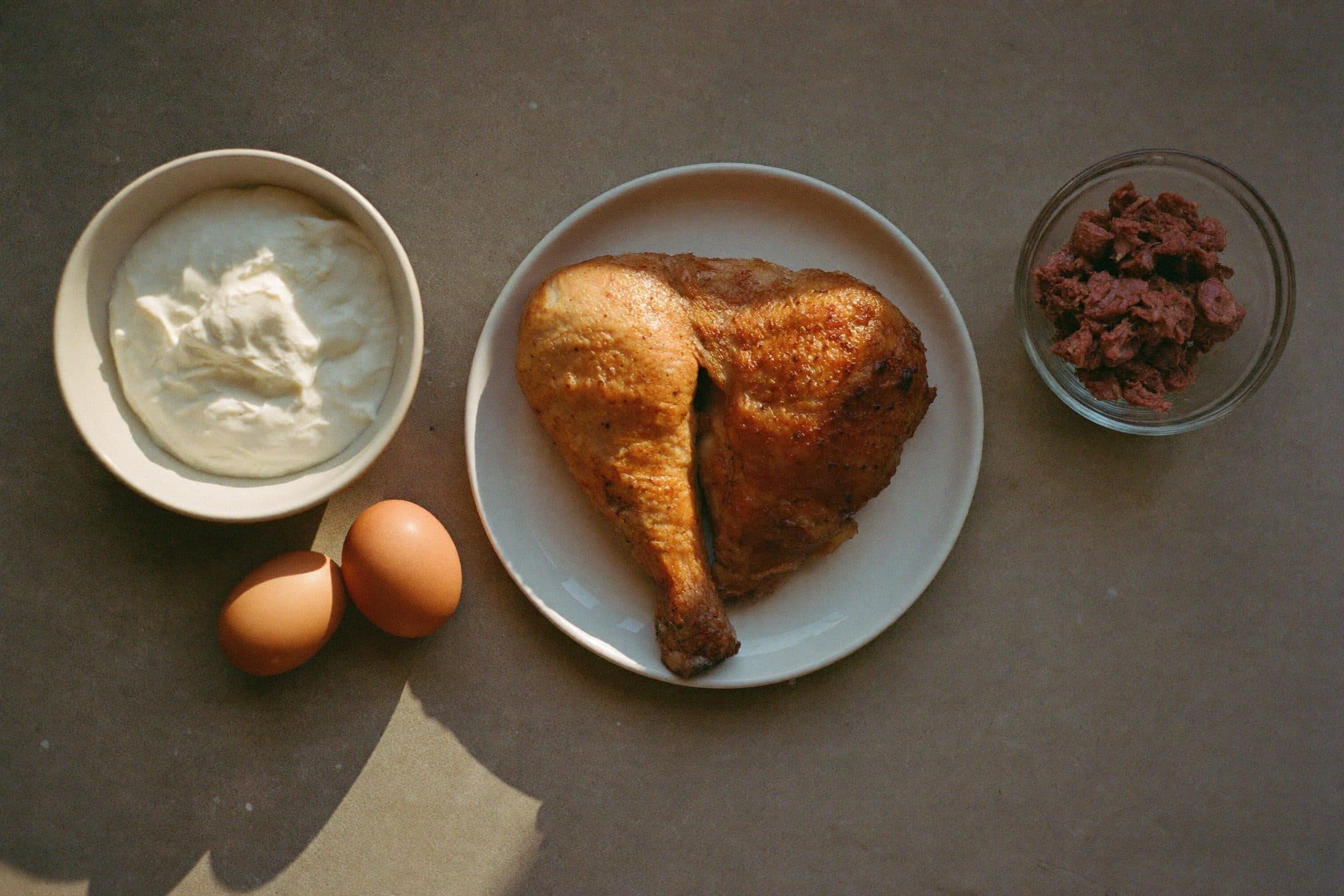
03What 40 grams looks like
40 g is one 150 g cooked chicken thigh, a 350 g tub of Greek yogurt, or a can of tuna plus two eggs [3].
04What if you miss a day?
One 80 g day inside a 125 g week is a rounding error — protein behaves like a weekly average, not a daily pass/fail.
Nothing meaningful happens. Protein needs behave like a weekly average, not a daily pass/fail — one 80 g day in a 125 g week is a rounding error. Plan for the worst week, not the best one.
Do I need protein powder?
Is more protein better?
Does timing matter?
General-audience information — not medical advice. How we source and verify. No affiliate links in this breakdown. Last updated 2026-09-05.
This vs. that: rice bowls, burritos, and the 40-gram lunch
The same fast-casual order, built three ways, priced against the per-meal protein anchor. Generic math from the USDA database — no brands, no villains.
4 min · September 5, 2026NutritionThe 90-minute meal prep
One Sunday session, five weekday lunches, 35–45 g of protein in every container. The math, the timeline, and the honest food-safety fine print.
5 min · September 5, 2026