
Same counter, same fillings — 4 oz chicken, beans, cheese — and every build clears the 30–45 g per-meal protein anchor. The base is the real decision: salad about 430 kcal, rice bowl about 620, burrito about 980. The 12-inch tortilla alone costs 358 kcal before the filling starts. Order the base your day can afford.
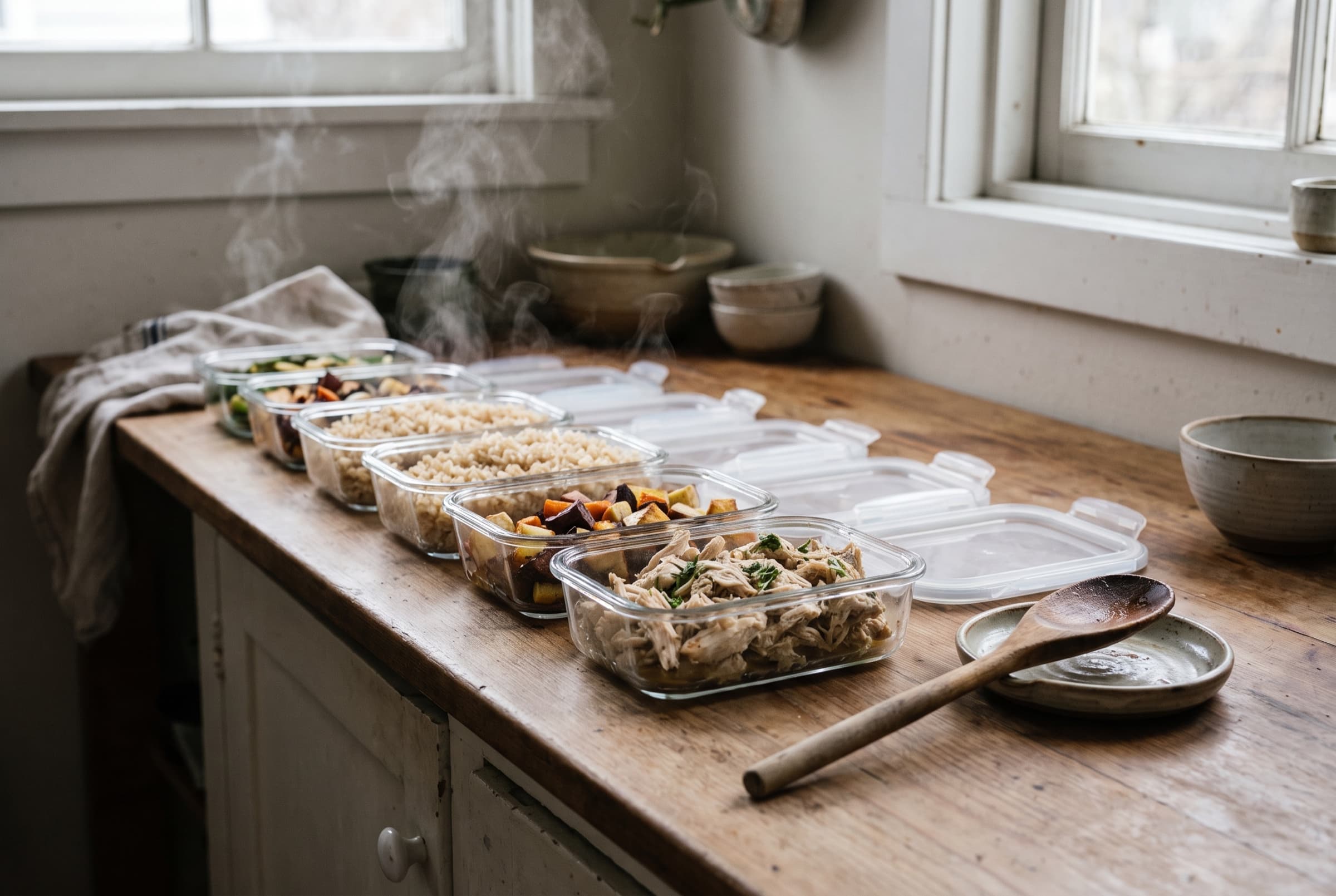
01What does a 40-gram lunch actually mean?
Lunch's whole job is to land 30–45 g of protein — the per-meal band where muscle-building benefit tops out [1] — without wrecking the day's energy budget.
The number comes from the protein-math breakdown: per meal, the useful ceiling sits around 0.4 g/kg — call it 30–45 g for most people who train [1]. It serves the daily anchor, the 1.6 g/kg a day where muscle-gain benefits plateau [2]. Lunch's whole job is to land inside that band without wrecking the day's energy budget.
The fast-casual counter is where that job gets decided for a lot of full calendars — same line, same scoops, three very different exits. So build the identical order three ways and put real numbers on it.
02Rice bowl vs. burrito vs. salad: what actually changes?
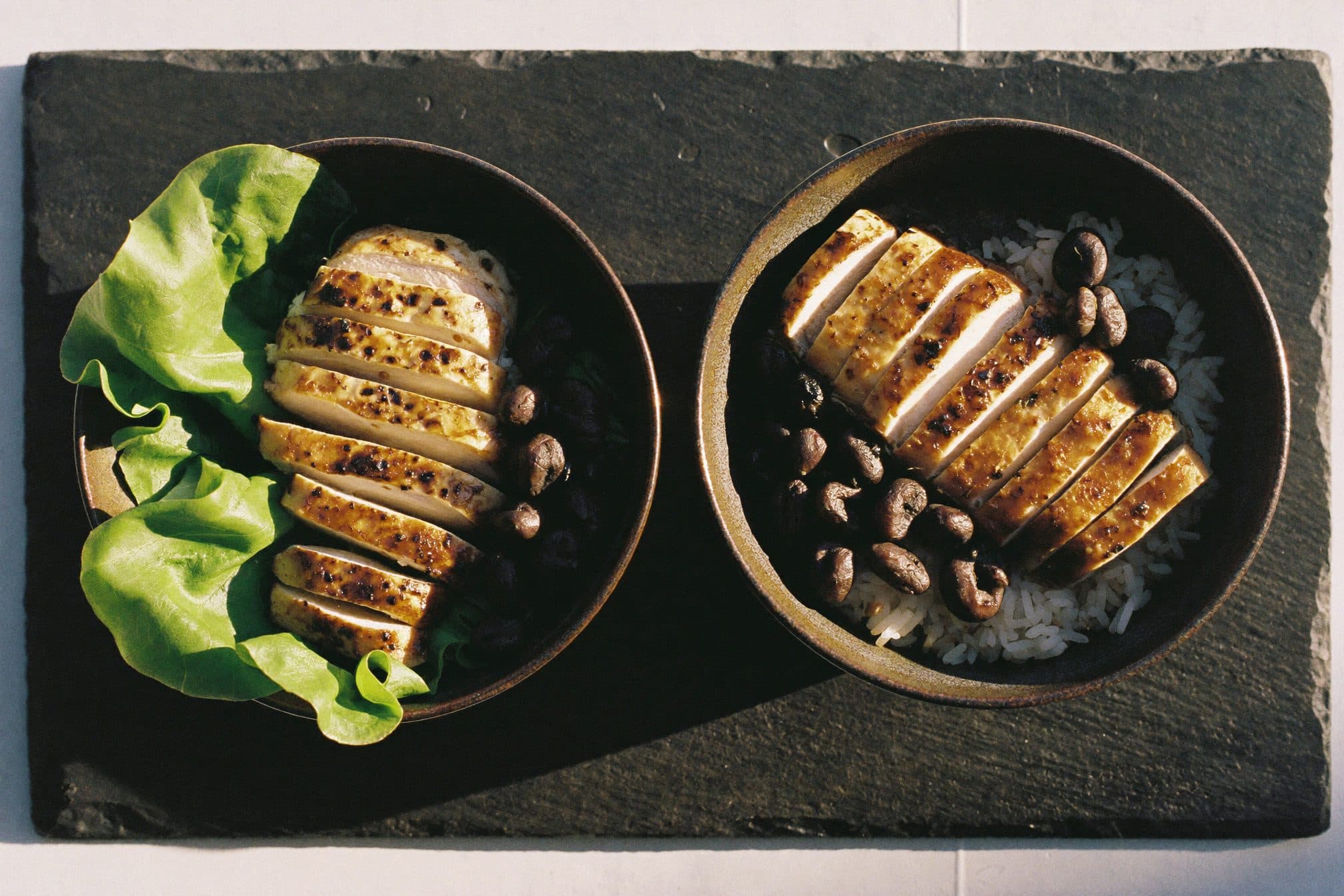
With identical fillings, protein barely moves — 50 to 63 g — while calories more than double, 430 to 980 kcal; the base decides the bill, not the protein.
Fix the fillings: a 4 oz cooked chicken scoop, half a cup of black beans, an ounce of shredded cheese. Vary only the base — two cups of romaine, a cup of white rice, or rice wrapped in a 12-inch flour tortilla. Generic USDA values, no brand's menu math [3].
Read the two columns separately. Protein barely moves — every build clears the anchor before the base is even chosen, because the chicken, beans, and cheese bring 49 g on their own [3]. Calories more than double: the spread between the lightest and heaviest build is about 550 kcal. At this counter, protein is decided at the scoops. The base only decides the bill.
By signing up you agree to receive our emails, including occasional offers, and to the privacy policy.
03How many calories is the tortilla, really?
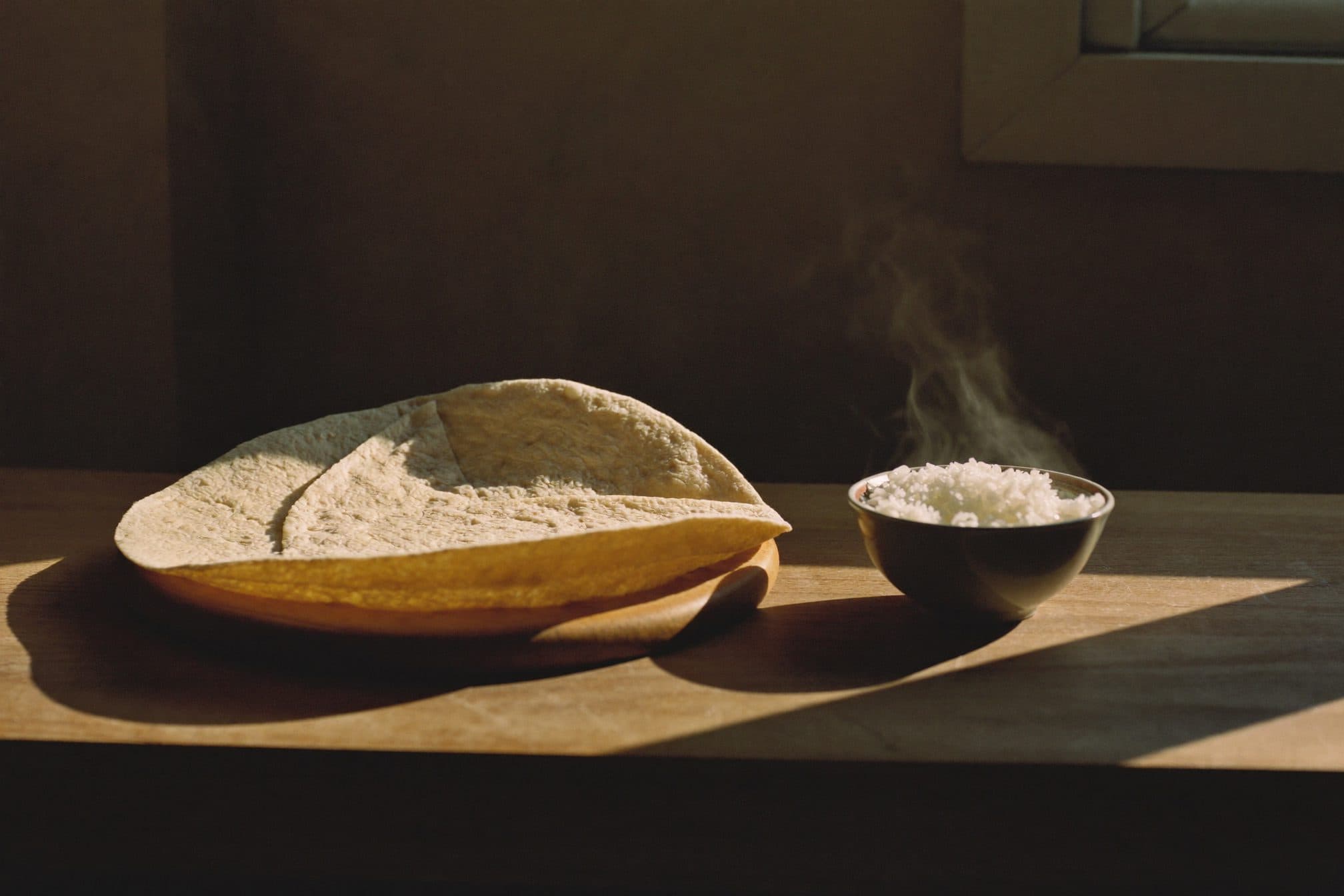
The 12-inch tortilla runs 358 kcal with 10 g of protein — more than the rice it wraps, nearly double the chicken's bill [3].
The wrapper is the quiet line item. A 12-inch flour tortilla weighs about 117 g and runs 358 kcal with 10 g of protein — before a single scoop goes in [3]. That's more than the cup of rice it wraps, and nearly double the chicken's bill.
None of this makes the burrito a villain — it's the same lunch plus roughly 360 kcal of wrapper, useful on a heavy training day and expensive on a desk day. If you want the fold without the full bill, a 10-inch tortilla runs about 220 kcal [3]. The bowl is the burrito minus the wrapper. The salad is the bowl minus the rice. Same protein job all the way down.
04Do you need double meat to hit the target?
Not for this plate — one 4 oz scoop lands 35 g [3] — but when the whole day runs light, doubling the scoop beats doubling the base.
Not for the meal — one 4 oz scoop already lands 35 g, inside the band [3]. And the per-meal ceiling is real. In one study, a 113 g serving of lean beef — 30 g of protein — raised muscle protein synthesis by about 50% in both young and older adults, and tripling the serving to 90 g of protein added nothing further [4].
Where double meat earns its price is the daily ledger, not this plate: if the rest of the day runs light, a second scoop beats a bigger base. Doubling the chicken adds 35 g of protein for 187 kcal; doubling the rice adds 4 g for 205 [3]. Same bill, eight times the protein. When in doubt, upgrade the scoop, not the starch — the same scoops-first logic that runs through the rest of the nutrition breakdowns.
Do all three builds really hit the protein target?
Which build should I actually order?
Where does 30–45 grams come from?
General-audience information — not medical advice. How we source and verify. No affiliate links in this breakdown. Last updated 2026-09-05.
Protein math for people who cook twice a week
The daily target, split across meals you'll actually eat. Plain numbers, no powder required.
4 min · September 5, 2026NutritionMaintenance calories without an app
Two honest ways to find the number — a formula you can do on paper, and a bathroom scale that outranks it. No wearable required.
5 min · September 5, 2026