
Snoring alone is usually just noise. Snoring plus witnessed pauses, gasping, or heavy daytime sleepiness is the classic picture of obstructive sleep apnea, which reaches 9.5% of men aged 30–49 and 17.4% at 50–70 in moderate-to-severe form. A 10% weight gain is associated with a 32% rise in apnea severity. If your partner reports pauses, tell a doctor.
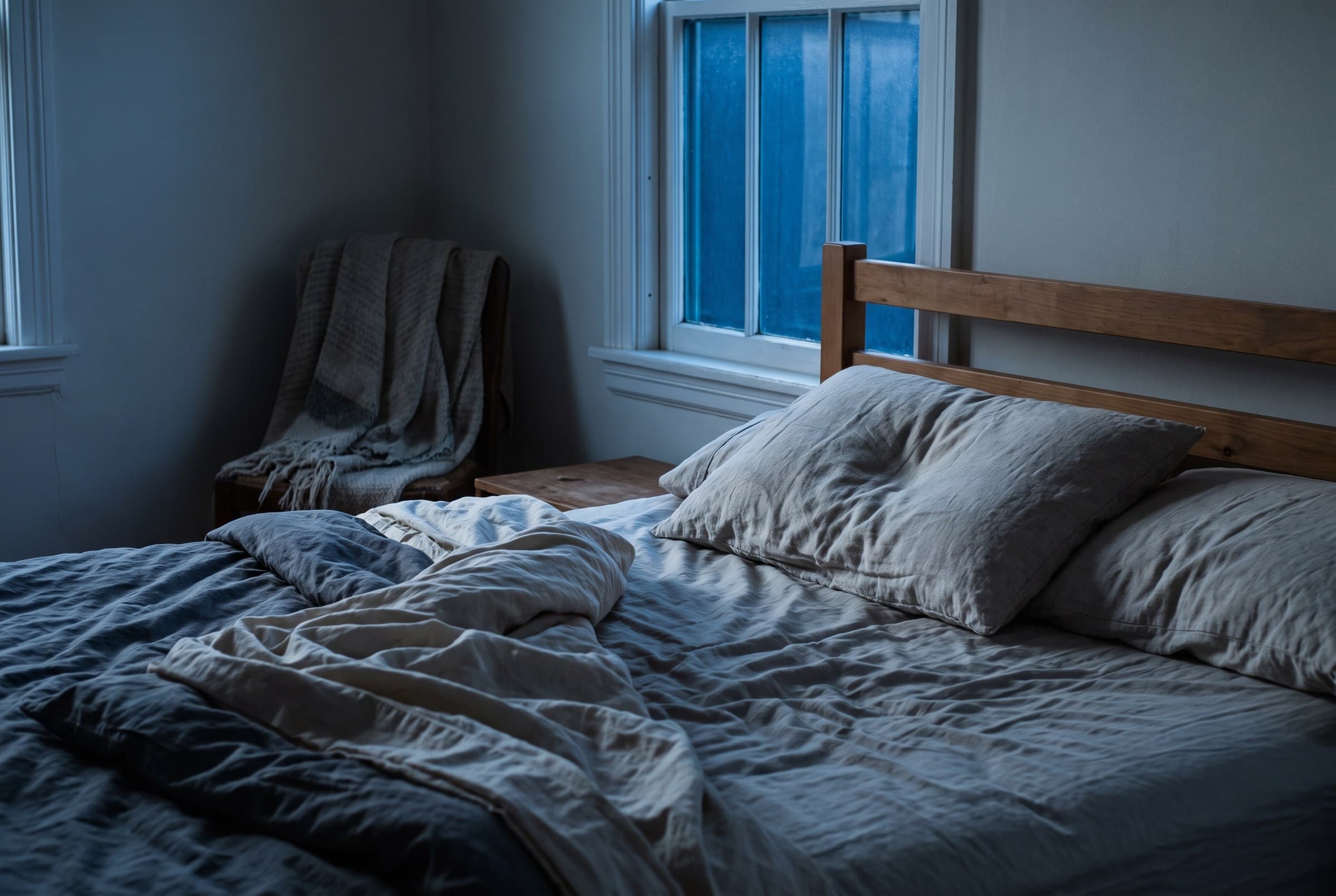
01When is snoring just noise, and when is it a flag?
Snoring alone is usually noise; snoring broken by silences and gasps is the classic apnea flag — worth a place alongside the rest of your sleep.
Snoring is turbulence — soft tissue in the throat fluttering as air squeezes past. On its own, at low volume, most nights it means nothing. The flag pattern is different: loud snoring broken by silences, then a snort or gasp as breathing restarts. Those silences can be apneas — moments where the airway closes entirely. The person who has them almost never remembers them. The witness in the next pillow holds the data.
This is not a rare-disease story. Estimates built from the Wisconsin Sleep Cohort put moderate-to-severe sleep-disordered breathing — 15 or more breathing interruptions per hour — at 9.5% of US men aged 30–49 and 17.4% at 50–70 [1]. Counting the mild form, the estimates reach 26.6% and 43.2% [1]. In a room of ten middle-aged men, the odds say at least one is stopping breathing at night and calling it snoring.
02How does weight change snoring and apnea?
A 10% weight gain was associated with a 32% rise in apnea severity, and a 10% loss with a 26% drop — the biggest lever you control [2].
More tightly than almost any other factor you control. The same Wisconsin group followed 690 adults across 4-year windows. They measured what weight change did to the apnea-hypopnea index — the count of breathing interruptions per hour of sleep. A 10% weight gain was associated with a 32% increase in that index, and with 6-fold odds of developing moderate-to-severe sleep-disordered breathing [2].
The arithmetic runs both directions: a 10% weight loss was associated with a 26% drop in the index [2]. For a 200 lb man, that's a 20 lb swing either way — the same swing this site's training and protein articles are already aimed at, quietly doing airway work on the side.
By signing up you agree to receive our emails, including occasional offers, and to the privacy policy.
03What questions does a sleep clinic actually ask?
Clinics gather the picture with eight blunt questions — snoring, tiredness, witnessed pauses, blood pressure, body size, age, neck, sex — and look closer from 3 yes answers up [3].
Sleep clinics have an eight-item questionnaire — originally validated in pre-surgical patients by Chung and colleagues in 2008 — that gathers the picture in under a minute [3]. It isn't a verdict and it isn't something to grade yourself with. It's simply the information a clinic wants first, and knowing it tells you what details matter when you bring this up.
Notice what the list implies: a man over 50 with a 17-inch collar starts with points before anyone mentions his sleep. In the original validation work, 3 or more yes answers flagged 93% of people with moderate-or-worse apnea, and 100% of severe cases [3]. The questions are blunt on purpose — the pattern is that visible.
04What is sleep apnea associated with when it's left alone?
In a 10-year cohort, men with severe apnea who weren't using CPAP had roughly double the fatal cardiovascular event rate of milder cases [4].
The honest, non-alarmist version: apnea that goes unaddressed keeps company with bad outcomes. In a Spanish observational study, 1,651 men were followed for about 10 years. Those with severe apnea who weren't using CPAP — the pressurized-air mask that holds the airway open overnight — had fatal cardiovascular events at 1.06 per 100 person-years, roughly double the rate of the mild-to-moderate group [4]. Non-fatal events ran at 2.13 [4]. Men using CPAP fared markedly better; the authors' conclusion was that the mask was associated with lower risk [4].
Add the daytime side — sleepiness behind the wheel, flat training, the `3` p.m. fog you've been blaming on the kids — and the case for one short medical conversation makes itself. Apnea is also one of the reasons a home blood-pressure cuff reads high in men who otherwise look fine.
05What do you actually say to the doctor?
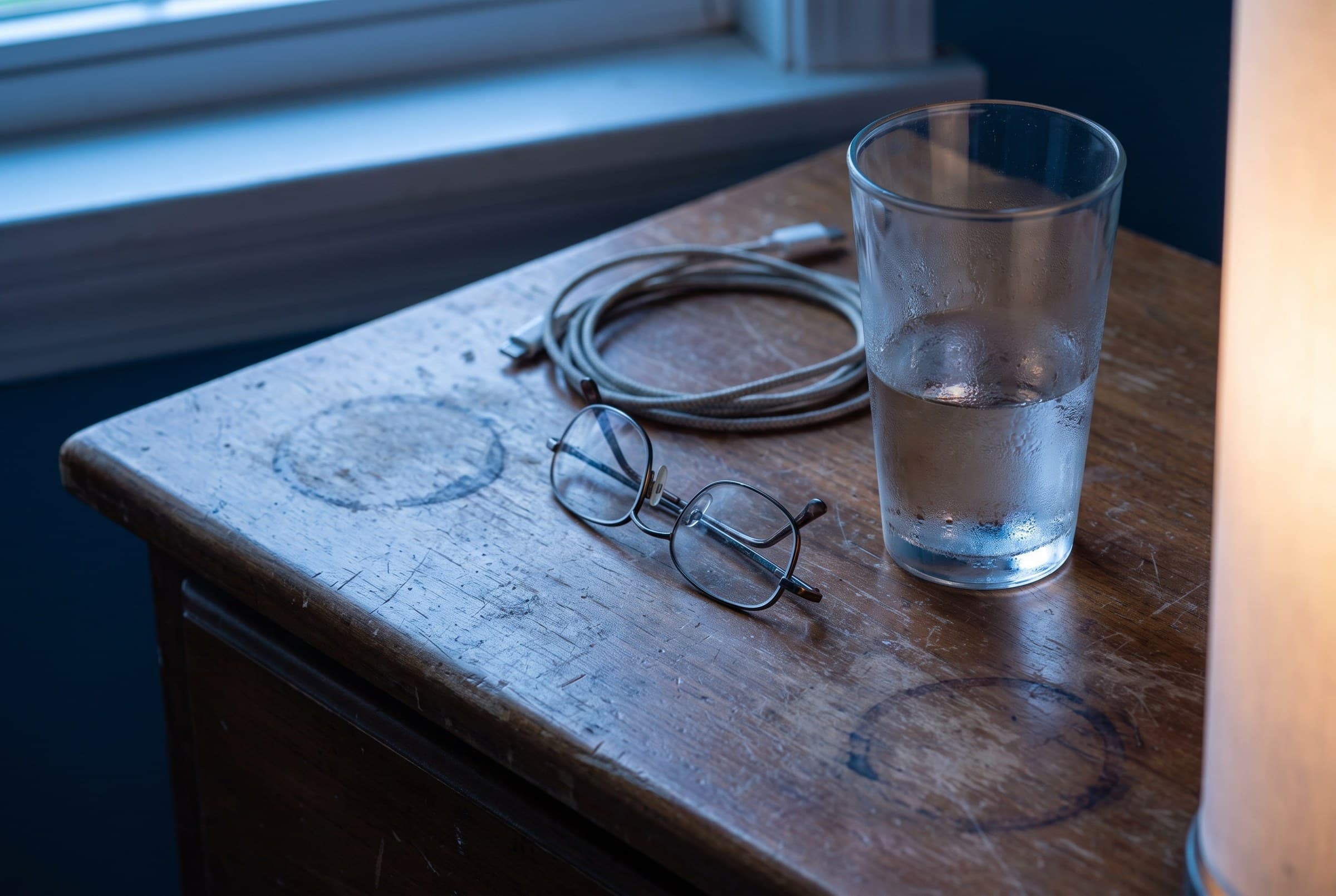
One sentence starts it — my partner says I stop breathing at night — plus the witness report, and many sleep studies now run at home.
One sentence does it: my partner says I stop breathing at night, and I'm tired most days. Bring the witness report — it's the single most useful data point you own [3]. A 30-second phone recording of the snore-silence-gasp pattern is worth more than a month of guessing. Many clinics can now arrange sleep studies you run at home in your own bed.
What this page can't do is tell you what your snoring means — that's a call for a doctor who knows you, your history, and your nights. What it can tell you: the pattern is common, the questions are simple, and the men who bring it up early are the ones who get their mornings back. Say the sentence.
My partner says I snore but hasn't noticed pauses. Am I fine?
Would losing weight quiet it down?
Does checking this mean a night wired up in a sleep lab?
General-audience information — not medical advice. Sleep apnea is a medical condition, and what your snoring means is a question for a doctor who knows you — this page is general education only. The eight questions are shown as information about what clinics ask, not as a tool for grading yourself. How we source and verify. No affiliate links in this breakdown. Last updated 2026-09-05.
Two drinks: what alcohol actually does to your sleep
The nightcap is a loan against the second half of the night. What Friday's beers do to REM, heart rate, and the 3 a.m. wake-up — in verified numbers, without the lecture.
5 min · September 5, 2026SleepSleep debt: what you can pay back, and what you can't
The part you can recover, the part you can't, and why weekend catch-up only pays half the bill.
5 min · September 5, 2026