
Melatonin is a timing signal, not a sedative — one small tool in the larger sleep picture. Across 19 trials it cut time-to-fall-asleep by about 7 minutes and added 8 minutes of sleep. A 0.3 mg dose has trial support; store bottles run to 10 mg, and measured contents miss their labels by wide margins. Small, early, consistent — and cleared with a pharmacist — is the whole game.
01Does melatonin actually work?
Yes, by minutes: about 7 minutes faster to sleep and 8 more minutes of sleep, pooled across 19 trials [1].
Yes — by minutes. Pool 19 randomized trials, 1,683 sleepers, and melatonin cut the time it took to fall asleep by about 7 minutes and added about 8 minutes of total sleep, with a small measured bump in sleep quality [1]. Real, repeatable, modest. Prescription hypnotics pull 10–20 minutes off sleep latency in the same meta-analysis literature [1] — melatonin is the gentler, weaker tool.
That gap is why sleep medicine is lukewarm where the supplement aisle is loud. For chronic insomnia in adults, the American Academy of Sleep Medicine suggests clinicians not use melatonin at all — a weak recommendation, but a pointed one [2]. If you're expecting a knockout, this is the wrong molecule — it won't rescue the night a sick kid decides for you. What it does is smaller and more specific.
02Is melatonin a sedative or a timing signal?
A swallowed dose tells the body clock that night has started; it does not force sleep, and the studied pattern is early, small, and consistent [4].
Your brain already makes melatonin — it rises in the evening and tells the body clock that night has started. A swallowed dose speaks the same language: it marks time, it doesn't force sleep. The clearest evidence is the guideline split. The same academy that waves melatonin off for insomnia endorses it for delayed sleep-wake phase disorder — a body clock running hours behind the life around it — and its phrase is specific: strategically timed melatonin [3].
The trials treat it the same way. In the dosing study below, melatonin went down 30 minutes before bedtime, at the same time, every night [4]. The studied pattern is early, small, and boringly consistent — a 2 a.m. rescue dose has no trial behind it.
Sleep itself is still tier one — the recovery hierarchy ranks it above everything sold as recovery. Melatonin doesn't add hours to that ledger. At best it moves the hours you already get to where your schedule needs them.
By signing up you agree to receive our emails, including occasional offers, and to the privacy policy.
03Why is the right dose smaller than the bottle?
A 0.3 mg dose improved sleep efficiency in adults over 50 with insomnia [4]; more milligrams mostly buy a longer signal, not more sleep.
The doses that built the evidence are small. In a double-blind trial in adults over 50 with insomnia, a physiologic 0.3 mg dose improved sleep efficiency; the 3 mg arm helped sleep too — and left plasma melatonin elevated into the daylight hours [4]. The insomnia evidence the AASM weighed was built around 2 mg [2]. Meanwhile, the gummies in a 2023 US audit carried labels of 1–10 mg per serving, and the highest single measurement came back at 13.1 mg [5].
Honesty note: in the pooled trials, higher doses did shave slightly more off sleep latency [1]. The gains stayed in minutes either way. Nothing in the trial record turns a 10 mg gummy into an extra hour — and the documented cost of the bigger dose is a signal that runs past sunrise [4]. More milligrams mostly buy a longer signal, not a deeper sleep.
04What's actually in the bottle?
Treat the printed dose as a guess: audits found contents from 83% under the label to 478% over it [6].
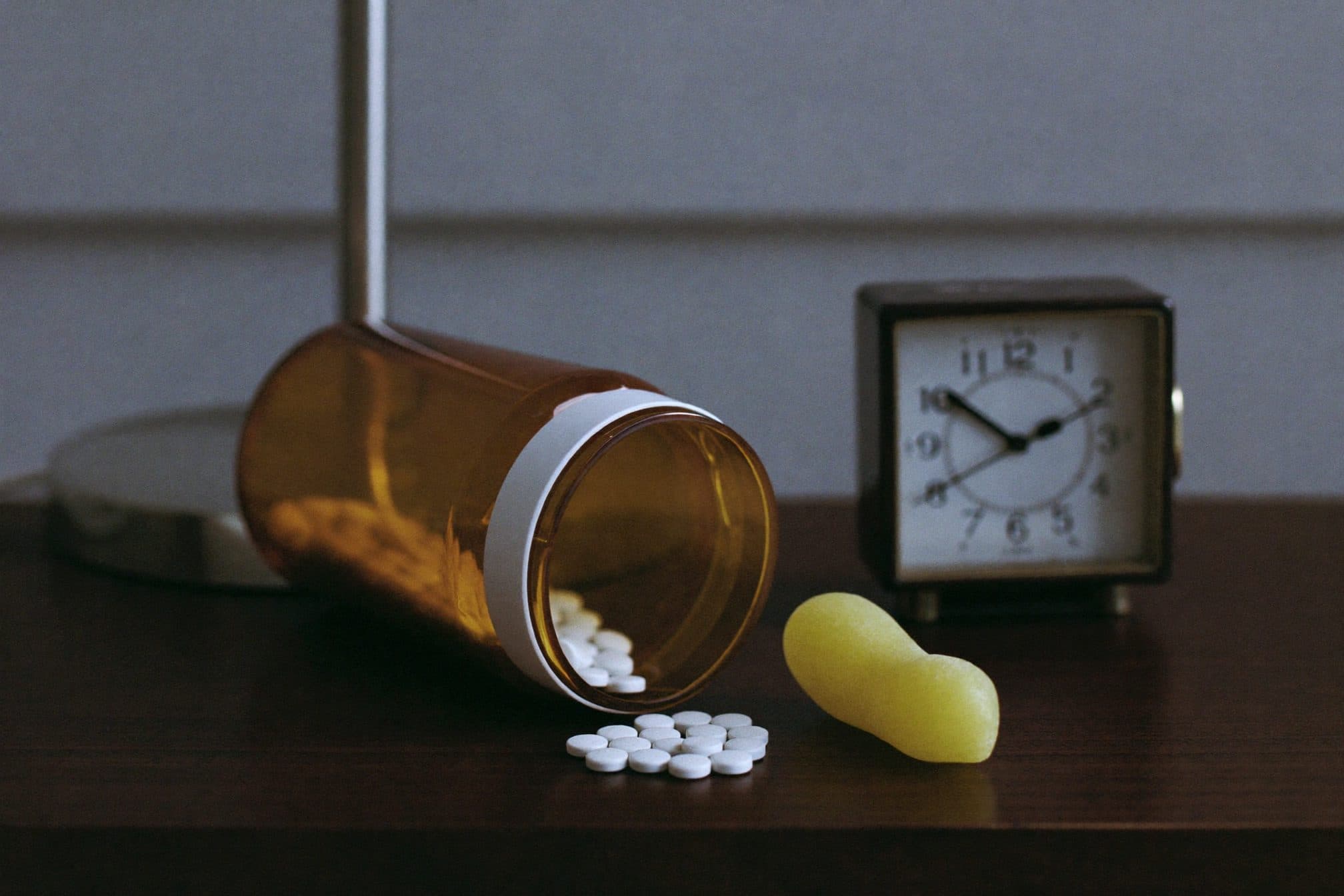
The least reliable number in this story is printed on the label. A 2017 analysis of 31 melatonin supplements measured contents from 83% below the label claim to 478% above it, and one product swung by as much as 465% lot to lot [6]. Eight of the 31 also contained serotonin — a related indoleamine with no business in a sleep aid — at 1–75 mcg [6]. The US gummy audit found 88% of 25 products off their label by more than 10%, including one with no detectable melatonin at all [5].
Practical read: treat the printed milligrams as an estimate. If you use melatonin, buy the smallest dose you can find from a brand that publishes third-party testing, and stay with it. We sell nothing — there is no house gummy here. The point is narrower: when the label can miss by hundreds of percent, the label is not the dose.
What dose of melatonin should I take?
When should I take melatonin?
Is it safe to take melatonin every night?
General-audience information — not medical advice. Melatonin can interact with prescription medications — take dosing and combination questions to a pharmacist or clinician before starting. How we source and verify. No affiliate links in this breakdown. Last updated 2026-09-05.
The caffeine cutoff: half-life math for real schedules
Your afternoon coffee keeps working long after you stop noticing it. The cutoff is arithmetic, not willpower.
5 min · September 5, 2026SleepTwo drinks: what alcohol actually does to your sleep
The nightcap is a loan against the second half of the night. What Friday's beers do to REM, heart rate, and the 3 a.m. wake-up — in verified numbers, without the lecture.
5 min · September 5, 2026