
A 15 kg toddler is 17–20% of body mass for a 75–90 kg man — and the net energy cost of walking rises in near-direct proportion to load carried at the waist. Carries also train grip strength, lateral trunk, and gait stability in ways lifts don't. Farmer carry, suitcase carry, weighted walk: conditioning already scheduled into your week.
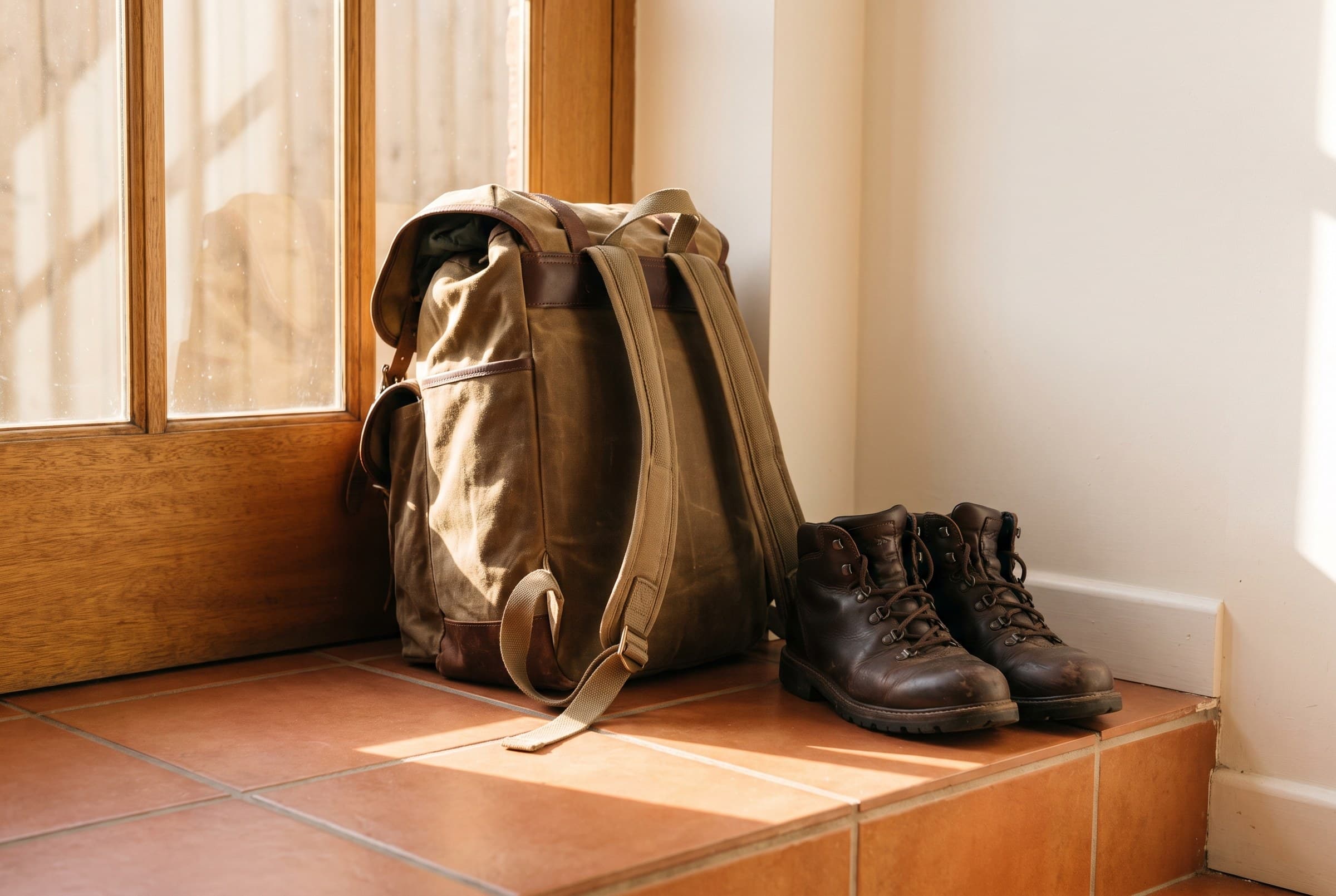
01Is carrying your kid actually training?
A 15 kg toddler is 17–20% of a grown man's body mass, and the net cost of walking rises almost in step with the load [1].
Exercise physiology has measured this, just under a different name. When researchers loaded walkers with 10%, 20%, and 30% of body mass carried at the waist, the net energy cost of walking rose in near-direct proportion to the load [1]. Carry 20% more mass, spend roughly 20% more net energy per step — no gadget, no class, no hack.
Run the dad math: a 15 kg toddler is 17–20% of body mass for a 75–90 kg man. Every zoo lap, every carry-me stretch home from the park, every trip up the stairs with a sleeper on your shoulder is loaded walking at a dose the laboratory literature has actually studied [1].
02Does it matter where the load rides?
Placement sets the price: 1 kg on the foot costs 7–10% more energy; load near your centre of mass is the cheapest carry there is [2].
Enormously. The military literature is the deepest well of load-carriage science there is. It reports that 1 kg on the foot raises energy expenditure by 7–10%, and 1 kg on the thigh by about 4% [2]. Load positioned close to the body's centre of mass keeps the energy cost lowest and posture upright [2].
A kid on your back or shoulders rides near your centre of mass — cheap per kilogram, sustainable for distance. A kid carried out front in both arms costs more. A kid on one hip loads you asymmetrically, which costs the most effort and, as the next section shows, trains the most trunk. Same kid, different workout.
By signing up you agree to receive our emails, including occasional offers, and to the privacy policy.
03What do loaded carries actually train?
Carries train what lifts skip — lateral trunk and steady gait under load [3] — plus grip, by the nature of holding the weight.
When researchers wired up strongman competitors, the carrying events — farmer's walk, suitcase carry, yoke — challenged the body differently than the lifting events did: heavy trunk muscle co-contraction to keep the spine stiff and the pelvis level while walking under load [3]. In the one-sided suitcase carry, the lateral trunk musculature — quadratus lumborum included — worked to hold the torso upright against a load trying to fold it sideways [3].
That's the kid on your hip. The study's authors concluded that loaded carrying would enhance traditional lifting-based strength programs [3]: grip, lateral trunk, hips, and gait stability under fatigue, none of which a bench press touches.
04How does a toddler compare with a rucksack?
A toddler weighs about what a pre-18th-century foot soldier marched with, but squirms — waking up stabilizers a strapped-down pack never asks for [2].
Favourably, as history goes: before the 18th century, foot soldiers seldom marched with more than 15 kg [2] — your toddler, give or take a snack. The differences cut both ways. A rucksack holds still, hugs your centre of mass, and lets you set the dose. A toddler squirms, shifts sides, demands the shoulders, and dismounts without notice — a live load, which is exactly why carrying one wakes up stabilizers a strapped-down pack never asks for.
The catch is progression. The kid's mass creeps up on its own schedule and quits the program around age six. The rucksack — or the twenty-minute dumbbell sessions — is how you keep the stimulus once your training partner outgrows the job.
05How do you build carries into a week?
Farmer carry, suitcase carry, weighted walk — or just stop putting the kid down.
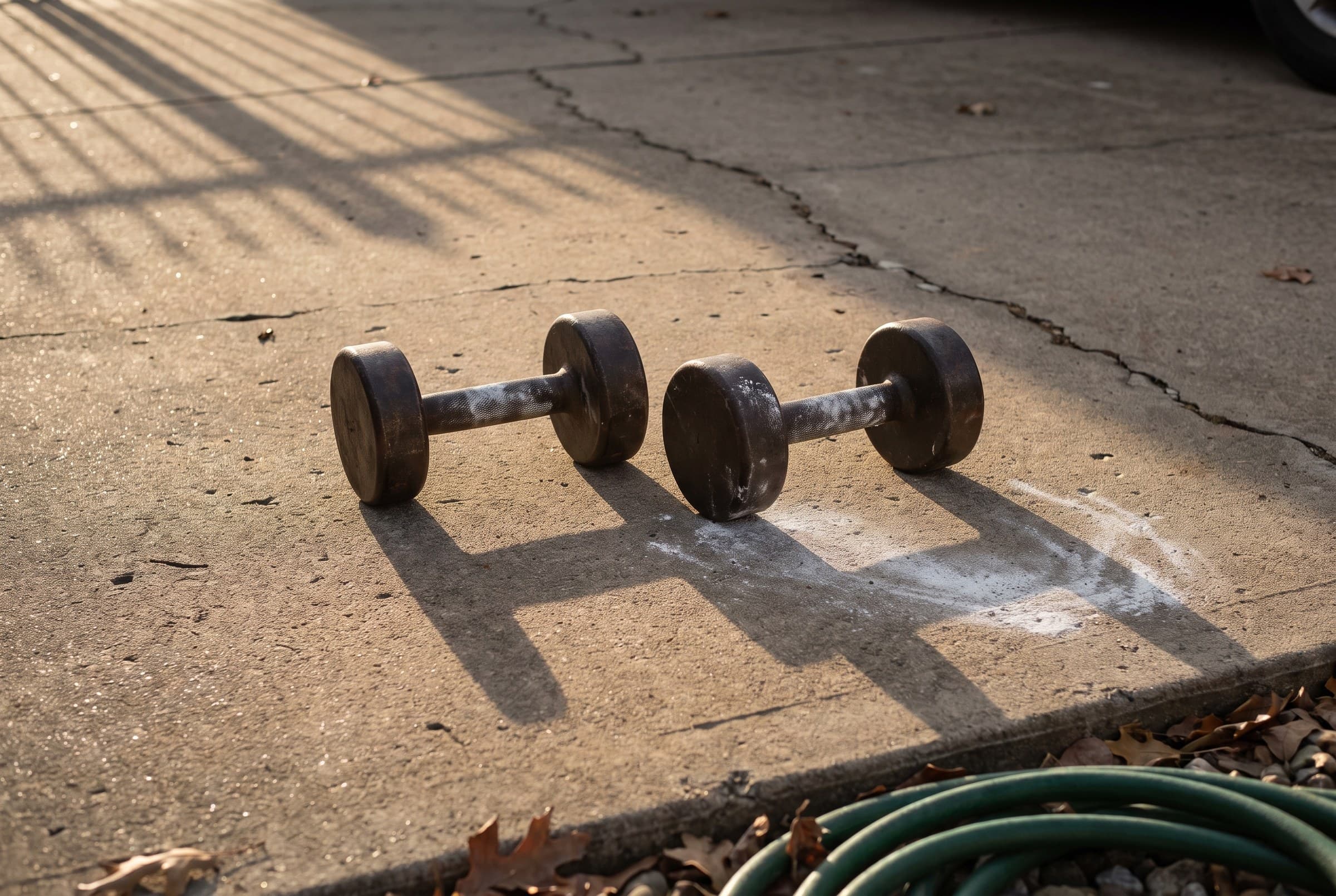
Three moves, zero skill barrier. The farmer carry: a heavy dumbbell in each hand, walk 20–40 m, rest, repeat for 4–6 rounds at the end of a training session. The suitcase carry: one dumbbell, same distances, both sides — the one-sided load that works the lateral trunk especially hard in the strongman data [3]. The weighted walk: a pack loaded to about 10% of body mass — the bottom of the range the lab literature tested [1] — on an ordinary 30-minute walk, building time before load.
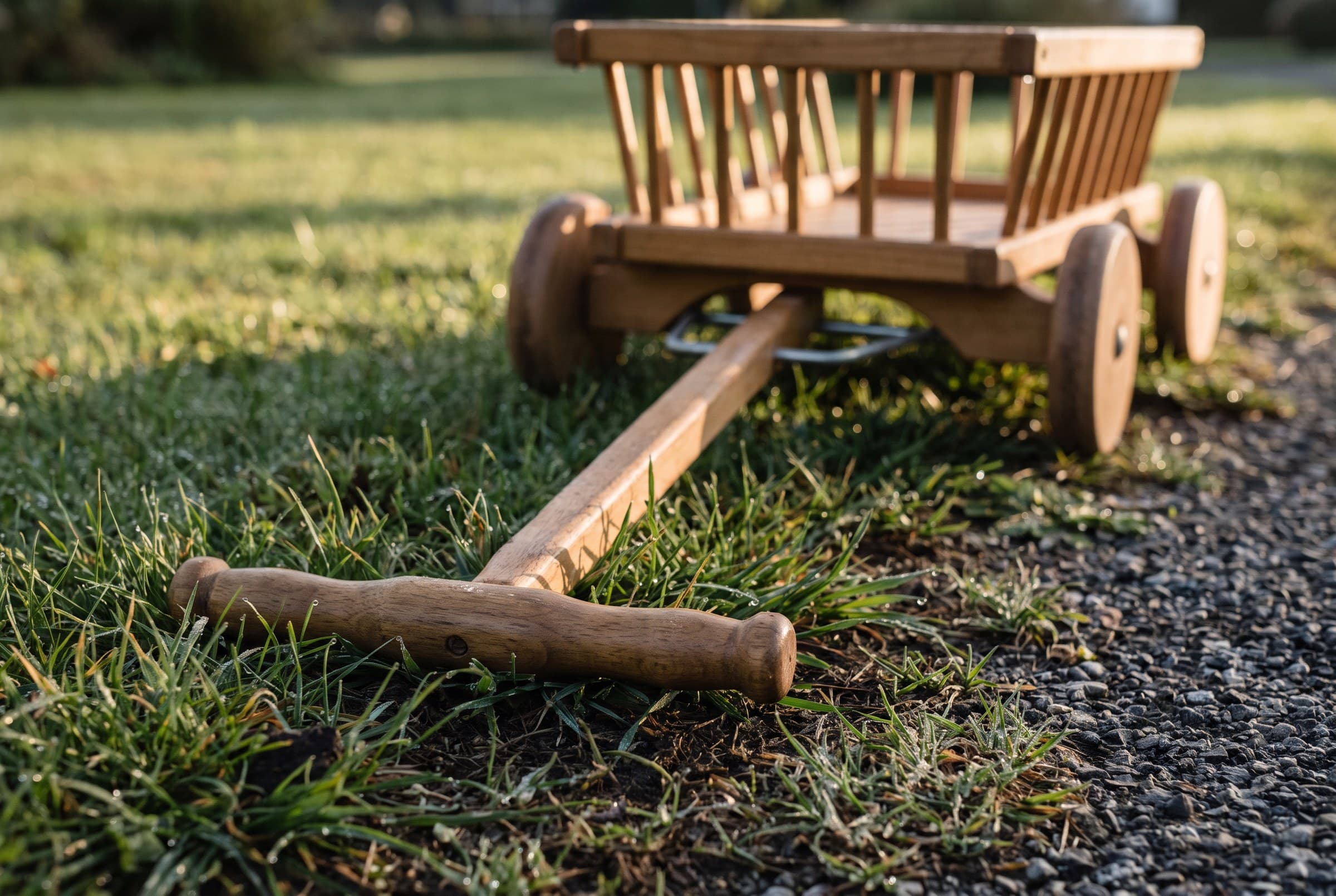
Or skip the equipment phase entirely. The school run with a kid on your shoulders, the sleeping transfer up the stairs, the one-trip grocery haul — the training was already scheduled. All you're adding is the decision to stop putting the load down.
Is a weighted vest better than dumbbells for walks?
Which side should I carry my kid on?
Does carrying count as cardio?
General-audience information — not medical advice. How we source and verify. No affiliate links in this breakdown. Last updated 2026-09-05.
Grip strength: the longevity number you can test in a doorway
One squeeze of a dynamometer tracks with lifespan more strongly than blood pressure does. The norms by age and sex, the honest truth about dead-hang standards, and how grip gets trained by accident.
5 min · September 5, 2026Training20-minute dumbbell sessions that actually progress
Three moves, three days, one pair of dumbbells — and a progression rule that survives your worst week.
6 min · August 28, 2026