
Grip strength is one of the strongest known markers of healthy aging. Across 139,691 adults in 17 countries, every 5 kg of lower grip was associated with a 16% higher death rate over 4 years. Peak grip runs 51 kg for men, 31 kg for women — and loaded carries, rows, and hangs train it for free.
01Why does grip strength track with how long you live?
Across 139,691 adults in 17 countries, every 5 kg of lower grip was associated with a 16% higher all-cause death rate [1].
In 2015, the PURE study put a dynamometer in the hands of 139,691 adults across 17 countries, then followed them for a median of 4 years. Every 5 kg of lower grip strength was associated with a 16% higher rate of death from any cause — and the association held after adjusting for age, activity, smoking, and the usual suspects [1].
The finding that travels best: grip strength showed a stronger association with all-cause and cardiovascular mortality than systolic blood pressure did [1]. Not because forearms are magic — grip is a cheap, honest proxy for total-body strength and muscle reserve, the thing you actually spend when life gets heavy.
02Is grip just a proxy for being old or sick?
Half a million younger UK Biobank adults gave the same answer: 16–20% higher mortality per 5 kg of lower grip [2].
The UK Biobank asked that question with half a million people aged 40–69 — younger and healthier than most mortality cohorts. Same answer: per 5 kg of lower grip, all-cause mortality ran 20% higher in women and 16% higher in men over a mean 7.1 years of follow-up, adjusted for the usual confounders [2]. Adding grip to a standard office risk score made the score slightly more informative — cheap information the clipboard didn't already have [2].
Association is the honest word — nobody has run the trial where squeezing harder extends lives. What the cohorts support is humbler and more useful: strength you can measure in 10 seconds tracks with outcomes decades out, and it is trainable at every age.
By signing up you agree to receive our emails, including occasional offers, and to the privacy policy.
03What counts as a strong grip for your age?
Peak grip in the early thirties runs 51 kg for men and 31 kg for women; the weak-grip cutoffs sit at 27 and 16 kg [3].
British normative data — 49,964 people across 12 studies — puts peak grip in the early thirties at 51 kg for men and 31 kg for women, with a slow slide that steepens after midlife [3]. The weak-grip line, drawn the same way bone-density cutoffs are, sits at 27 kg for men and 16 kg for women [3].
The measured standard is a handheld dynamometer: elbow bent at 90°, no leaning into it, best of three squeezes per hand. A 40-something man squeezing 45 kg is comfortably mid-pack. The point isn't the percentile — it's owning a number you can retest in five years. It pairs well with the floor test, the other minute-long number worth owning.
04Can you test grip in a doorway?
The dynamometer owns the published norms; the dead hang has none — it only tracks your own trend, retested under the same conditions.
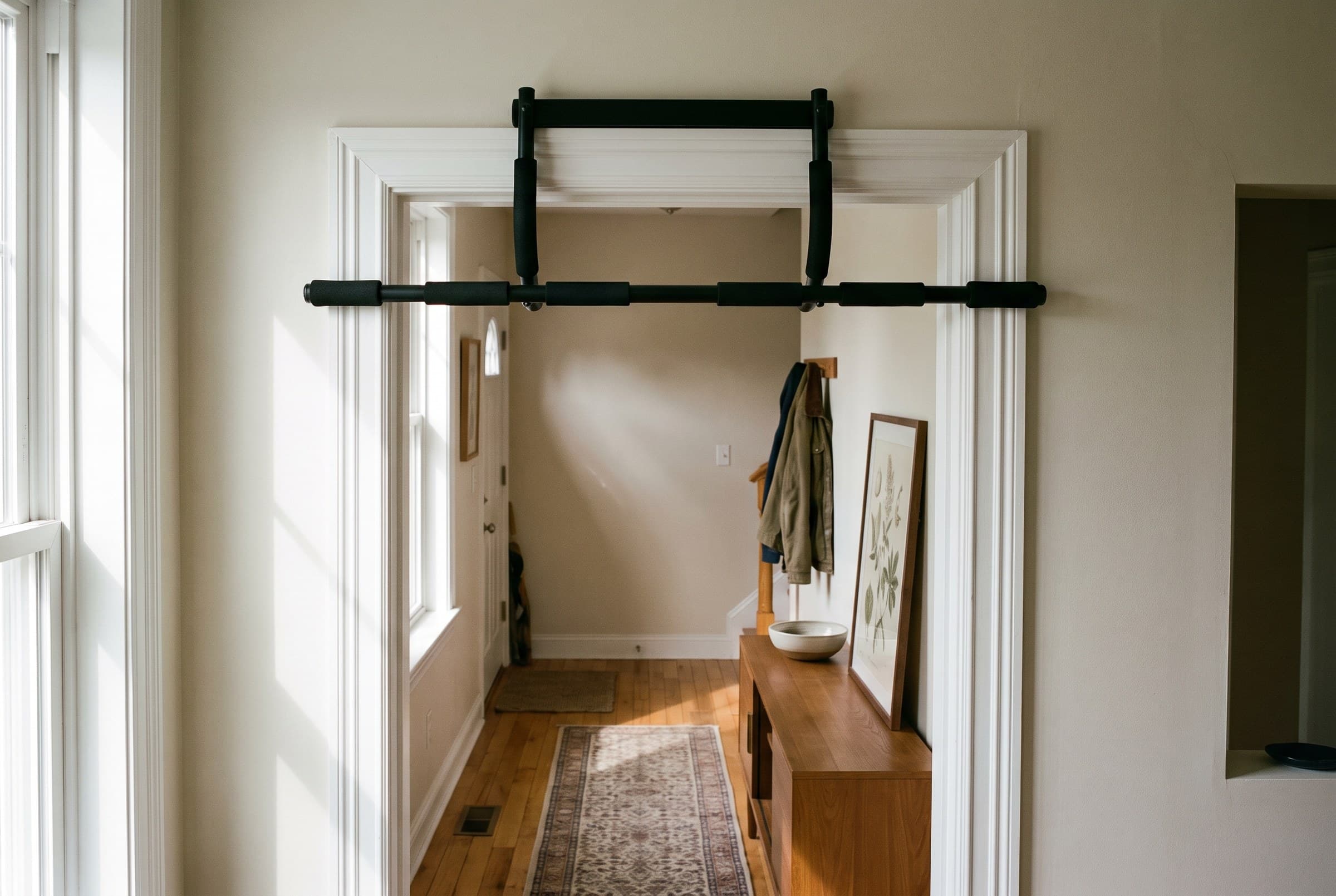
Sort of — and here's the honest version. The dead hang — hanging from the doorway pull-up bar with straight arms until your grip quits — is the internet's favorite no-equipment stand-in, and the time targets floating around (60 seconds for men, and so on) are gym lore, not literature. There are no published dead-hang norms to hold yourself against.
That doesn't make the hang useless. It loads the same forearm musculature at full body weight, it's brutally repeatable, and a hang time that grows across months is real information. Just keep the two tests in their lanes: the dynamometer has 49,964-person norms behind it [3]; the hang bar has your own history. A $30 dynamometer settles the question properly.
05How do you train grip without training grip?
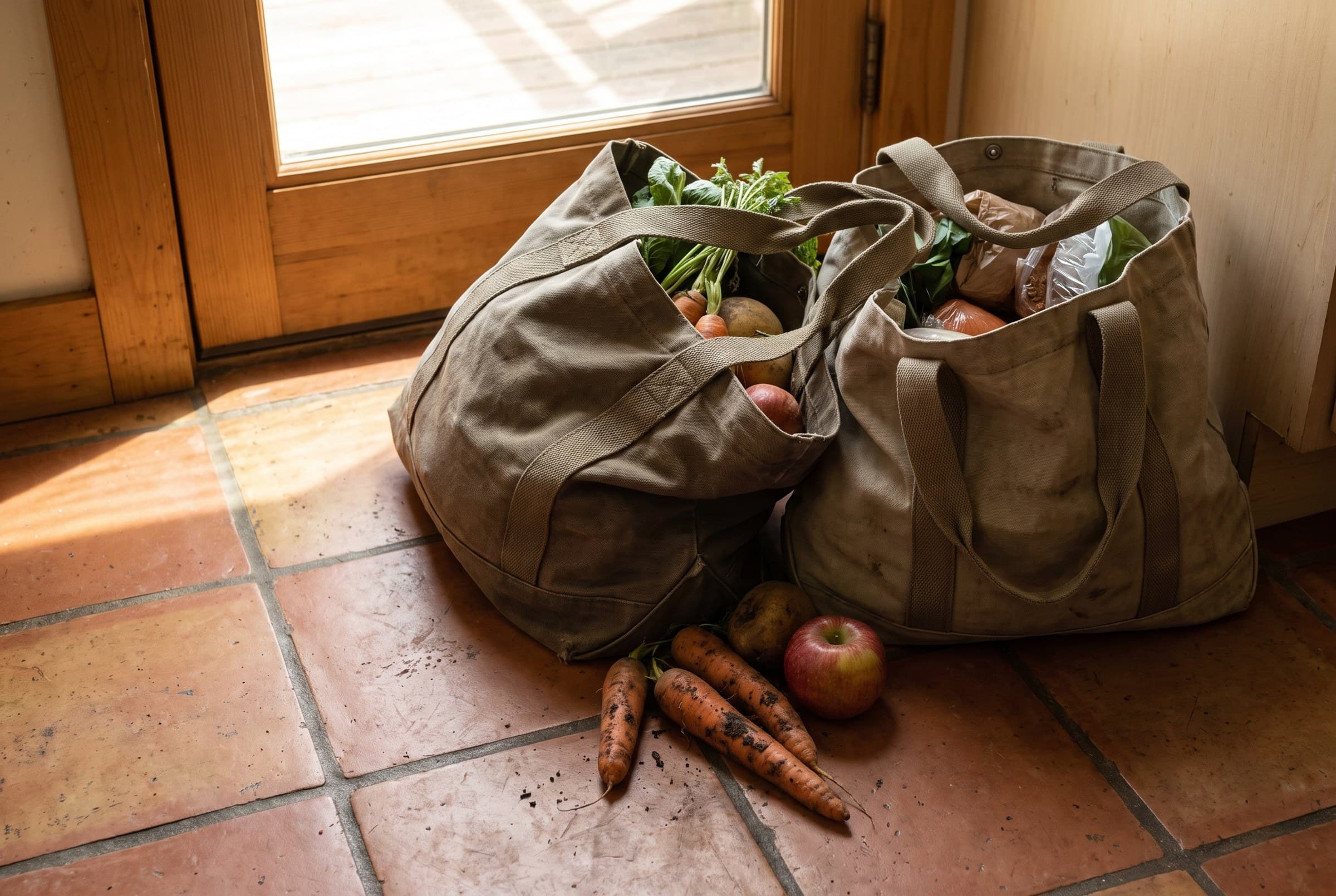
Skip the straps, carry the groceries, hang while the kettle boils — grip improves as a side effect of training worth doing anyway.
Mostly, you stop outsourcing it. Skip the straps on rows and deadlifts. Carry the groceries in one trip, the 15 kg sleeping kid up the stairs, the farmer carries at the end of a session. Hang from the bar while the kettle boils. Grip is the rare quality that improves as a side effect of training you should be doing anyway — carries, rows, hangs — plus a life that keeps handing you awkward loads.
And because grip tracks with total-body strength, the real program is the whole program: the 20-minute dumbbell sessions, the carries, the get-ups. The number in the doorway is the gauge. The training is everything attached to it.
Will squeezing grippers make me live longer?
What's a good grip number for a man in his 40s?
Is a dead hang enough of a test on its own?
General-audience information — not medical advice. How we source and verify. No affiliate links in this breakdown. Last updated 2026-09-05.
The floor test: get up without your hands
Sit down on the floor, stand back up, count what you touched on the way. One number tracks with survival over the next decade — and everything it flags is trainable.
5 min · September 5, 2026TrainingCarrying your kid is training: the loaded-carry math
The energy cost of hauling a toddler, measured by the same science that studies soldiers under rucksacks — and why the carry is the most dad-compatible conditioning there is.
5 min · September 5, 2026