
Three 20-minute dumbbell sessions a week clear the evidence bar for getting stronger — trials show gains from as little as one hard set per exercise. Aim for 9 sets per muscle weekly at 6–15 reps, superset everything, and progress reps before load.
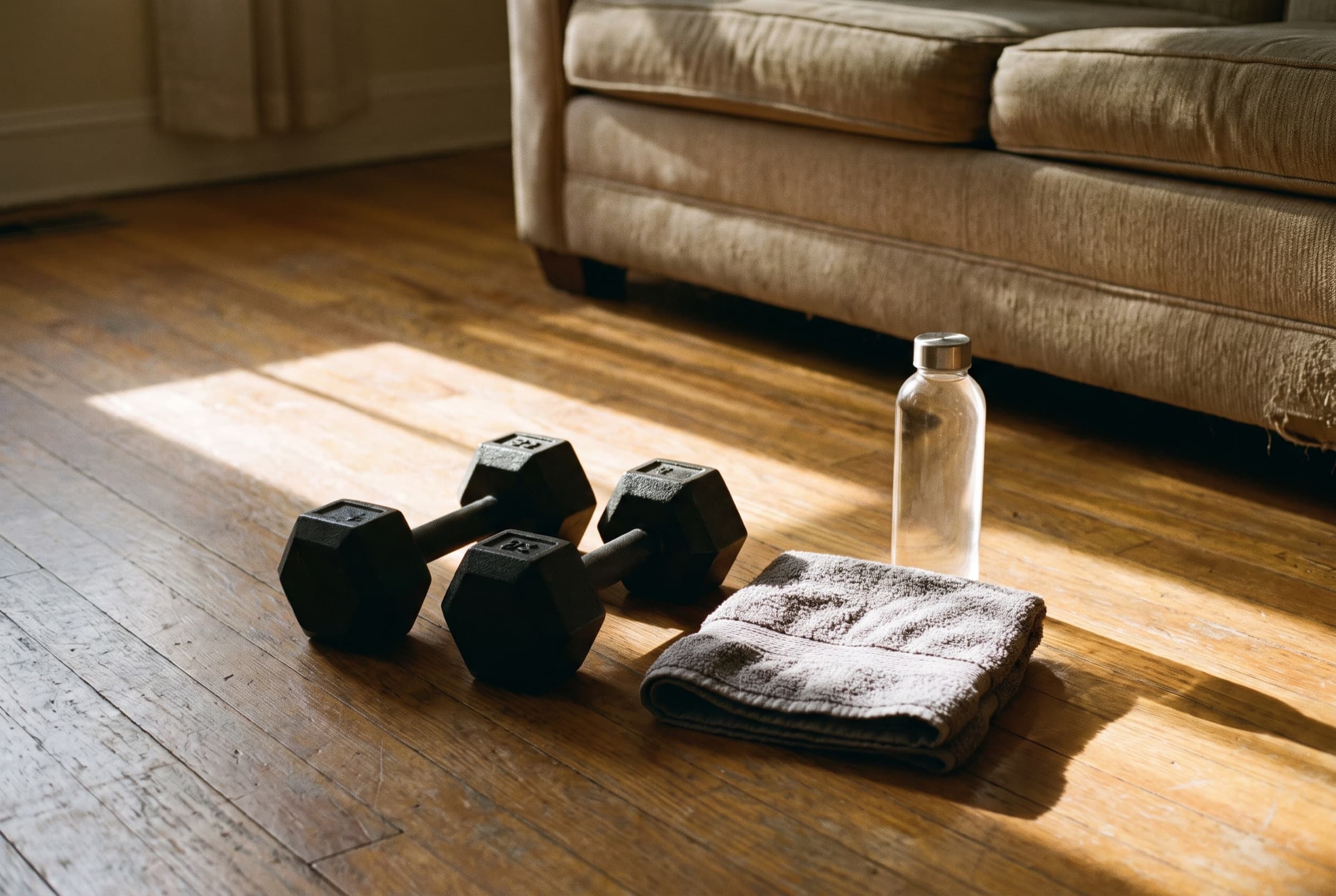
01Can 20 minutes actually build strength?
Yes — trials show strength gains from as little as one hard set per exercise, three short sessions a week [1][2].
The volume debate hides a quieter finding: strength is cheap. In an 8-week trial, trained men doing 1 set per exercise — sessions of roughly 13 minutes, 3 days a week — gained as much 1RM strength as the groups doing 3 or 5 sets [2]. Muscle size followed a dose-response curve; strength didn't.
The documented floor sits even lower: a single hard set of 6–12 reps at 70–85% of max, 2–3 times a week, produces measurable strength gains in trained men [1]. Suboptimal, yes. Zero, never.
02What fits in 20 minutes?
Three moves — a squat or hinge, a press, a row — paired so no muscle waits on another.
Three moves, no dead time: a squat or hinge, a press, a row — bilateral, multi-joint, dumbbells only. Pair them so one muscle rests while another works; supersets and similar set structures roughly halve session time at the same training volume [3]. And skip the treadmill warm-up — a light first set of the exercise itself is the warm-up the evidence supports [3]. Anywhere in the 6–15 range works; light or heavy covers what the choice actually changes.
By signing up you agree to receive our emails, including occasional offers, and to the privacy policy.
03How do you progress without adding plates?
Own the rep range first, then earn the weight: 3 × 8 up to 3 × 12, then add 2.5–5 lb and drop back.
Double progression: pick a rep range, own it, then earn the weight. Start at 3 × 8. Add a rep or two each session until you own 3 × 12. Then move up 2.5–5 lb and drop back to 8. In an 8-week trial, lifters who progressed reps and lifters who progressed load gained similar size and strength [4] — what matters is that something goes up, not which dial you turn.
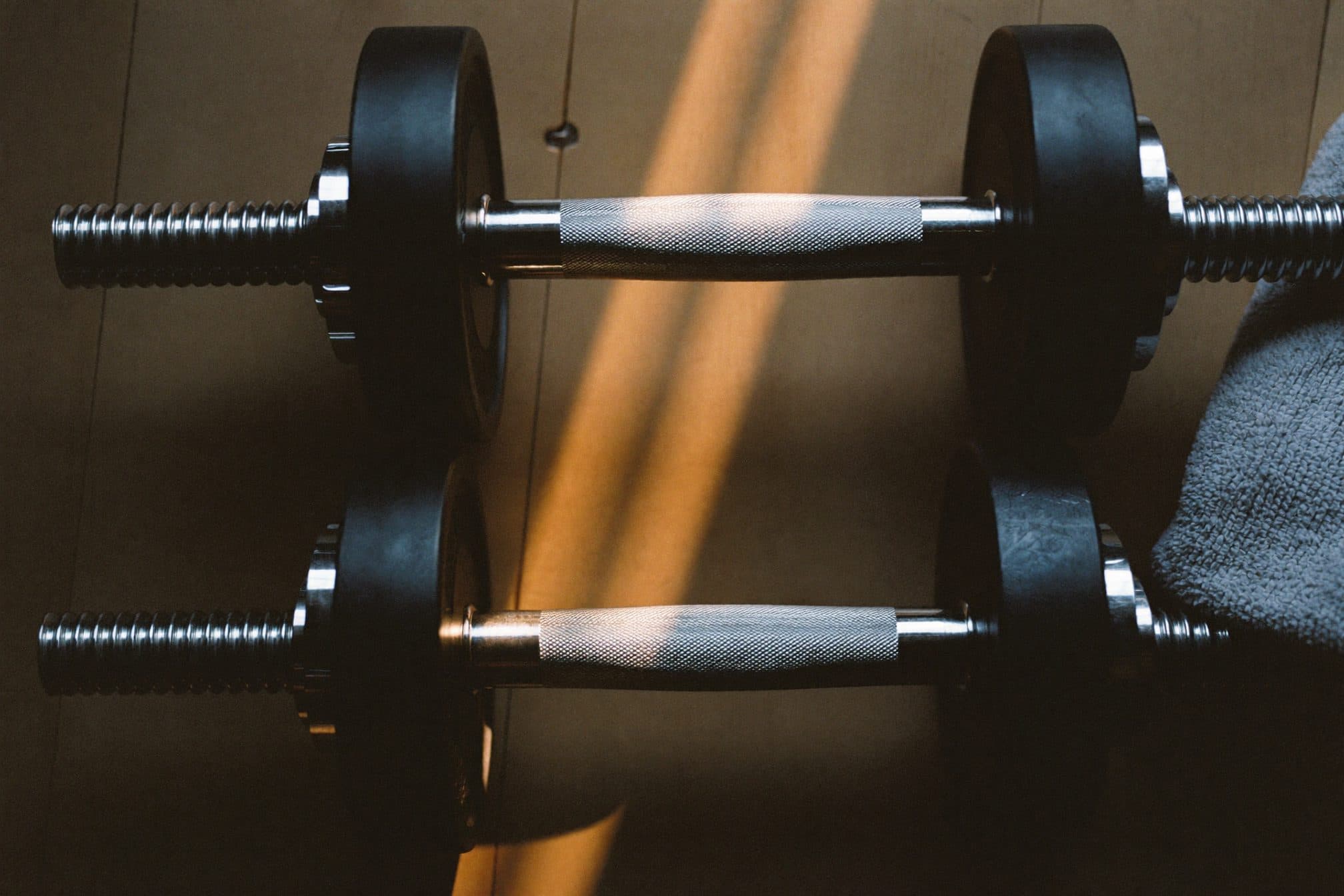
04What's the minimum that still works?
One hard set of each move still counts [1]. The worst week is the plan's base case, not its failure.
Travel, a sick kid, an 11 p.m. finish — the answer is one round, not zero. A single hard set of each move, 6–12 reps, close to failure, is the documented floor for holding and even building strength [1] — the same floor that keeps muscle after 40. The plan works because its worst-week version still counts, and the rest of the training library is built on the same floor.
Are dumbbells enough, or do I need a barbell?
Is 20 minutes enough to build muscle, or just strength?
Should I train to failure?
General-audience information — not medical advice. How we source and verify. No affiliate links in this breakdown. Last updated 2026-08-28.
The weekly set budget: how many sets actually build muscle
Sets per muscle per week is the currency of growth. The floor, the solid-return zone, and the line where extra sets turn to junk.
5 min · September 5, 2026TrainingLight or heavy: what rep ranges actually change
Near failure, light and heavy build the same muscle. Heavy buys one specific thing. The zone is wider than the feed sells.
5 min · September 5, 2026