
Light and heavy loads build muscle about equally when sets land near failure — the meta-analyses agree. Heavy loads win one specific prize: 1RM strength. There is a floor: at 20% of max, growth roughly halves. So pick the range each exercise and your joints tolerate — the growth zone is far wider than the feed says. Reps set the range; your weekly set budget sets the dose.
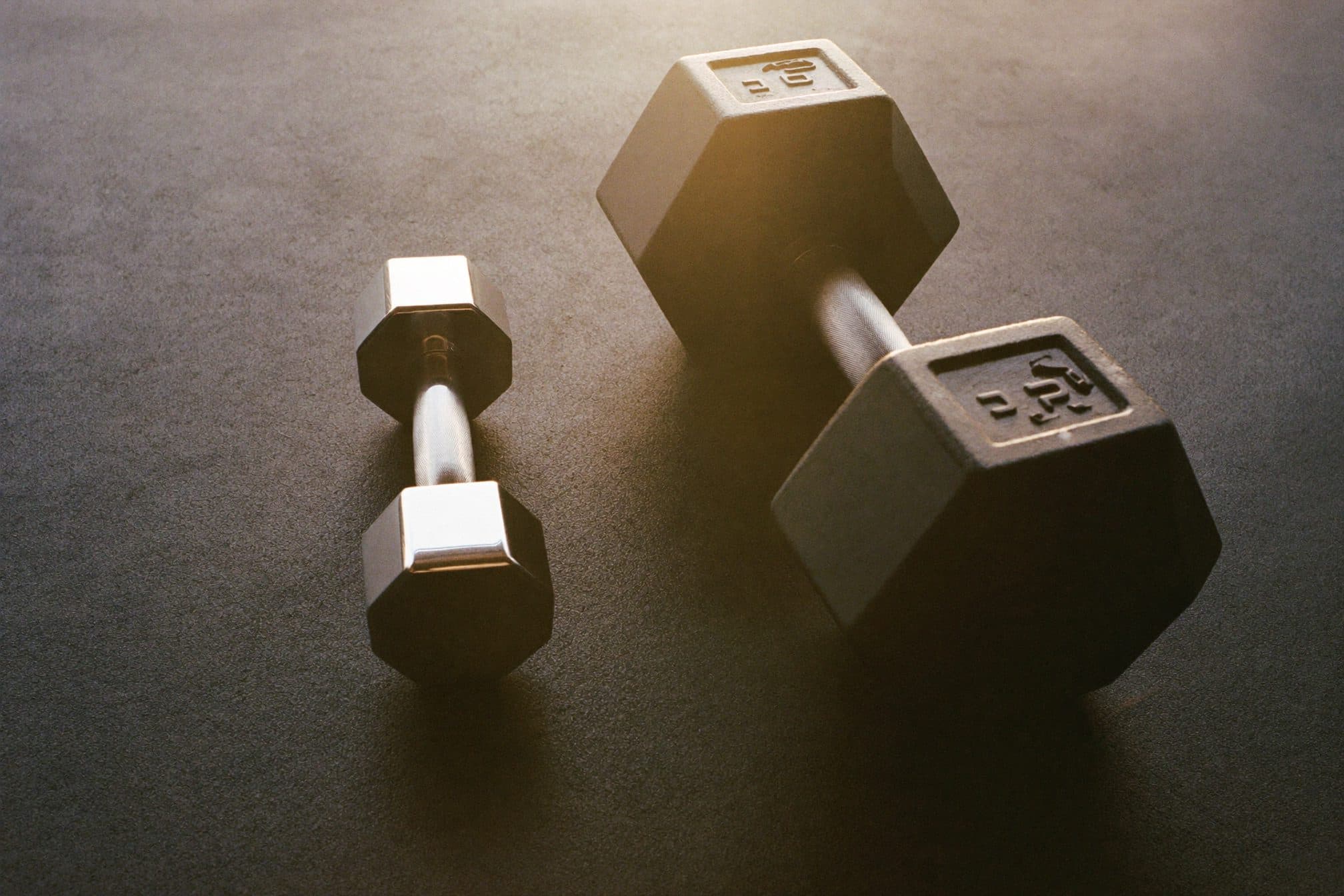
01Do light weights build as much muscle as heavy weights?
Across the meta-analyses, light and heavy loads grew muscle about equally when sets went near failure — heavy clearly won only 1RM strength [1][2].
Strip the debate to its trial form: same exercises, sets to failure, lighter bar versus heavier bar, measure the muscle. Across 21 studies, growth came out similar whether loads were light (60% of max and under) or heavy (over 60%) — while 1RM strength clearly favored heavy [1].
A network meta-analysis of 28 studies and 747 adults sharpened the picture: no growth differences between light (15+ RM), moderate (9–15 RM), and heavy (8 RM and under) loads [2]. For strength, heavy and moderate both beat light, with heavy holding a further, not-quite-significant edge over moderate [2].
02How light is too light?
The floor sits near 40% of max: at 20%, growth roughly halved even with every set taken to failure [3].
There is a floor, and one trial drew it cleanly. 30 men trained for 12 weeks with one arm and leg at 20% of max while the matching limb worked at 40, 60, or 80%, total work equated [3]. From 40% up, the muscle didn't care — quad growth landed at 20.5%, 20.4%, and 19.5%. At 20% of max, even with sets to failure, growth roughly halved: 8.9% [3].
The practical floor: anything from about 40% of your max upward is full price for size [3]. Below that, you're paying in long, burning sets for half the product.
By signing up you agree to receive our emails, including occasional offers, and to the privacy policy.
03When do heavy weights actually matter?
Heavy matters when the goal is a number on a bar — 1RM strength favored heavy training in both meta-analyses [1][2].
When the goal is a number on a bar. The heaviest single you can lift improves most with heavy training in both meta-analyses [1][2]. Part of that is skill — practicing the exact thing being tested. Isometric strength, measured away from the lift, showed no clear difference between loads at all [1].
04Does training close to failure matter more than the load?
Effort is the price of the equivalence — sets must end near failure, though stopping a rep or two short gives up almost nothing [4].
The equivalence has one clause: effort. The trials behind those meta-analyses took sets to failure [1][2] — a light set only matches a heavy one when it ends hard. But hard has slack in it. Across 15 studies of proximity to failure, training to outright set failure held only a trivial edge over stopping short, and strict momentary failure showed no clear advantage at all [4].
So the working rule survives a full calendar: take most sets to within a rep or two of the wall, and let the occasional final set touch it. It's the same effort rule the `20`-minute dumbbell plan runs on.
05Which rep range should you pick?
Pick the range each exercise and each joint tolerates — the growth zone is wide enough that the choice is yours.
By exercise and by joint — because the muscle doesn't much care. Heavy suits lifts that load well: squats, hinges, presses, rows. Light suits the places heavy gets ugly — lateral raises, single-leg work, anything a cranky shoulder or a fixed pair of home dumbbells limits. The 6–15 window the 20-minute dumbbell plan uses [5] is a comfortable middle lane on a much wider road.
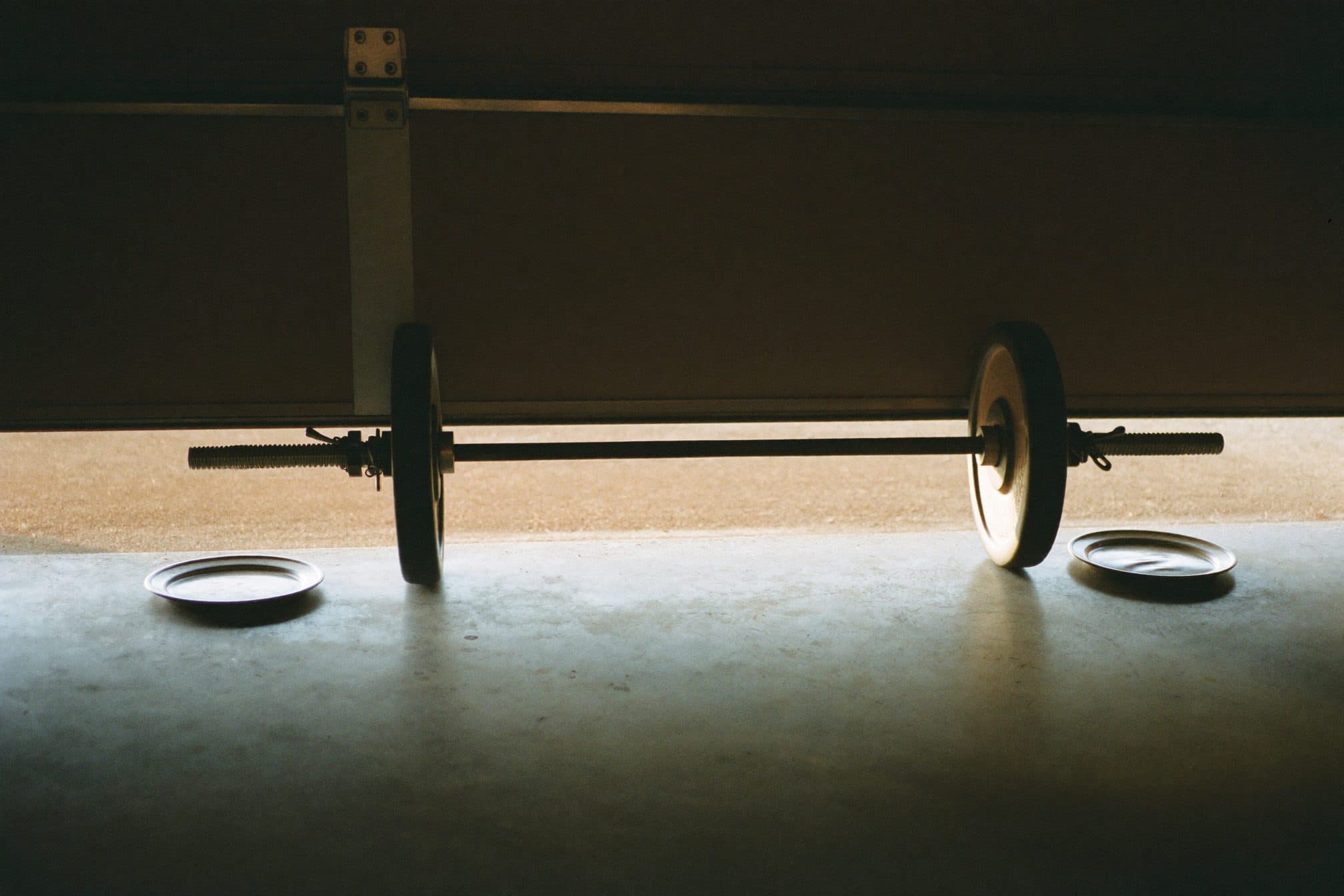
That's the quiet win in this literature: because the zone is wide, equipment stops being an excuse — for this lift, or for the rest of your training. The light pair in the garage grows what the loaded barbell grows — when the sets end near the same place [1][2].
Is there a special hypertrophy rep range?
Do light weights build strength too?
Do I have to take every set to absolute failure?
General-audience information — not medical advice. How we source and verify. No affiliate links in this breakdown. Last updated 2026-09-05.
The weekly set budget: how many sets actually build muscle
Sets per muscle per week is the currency of growth. The floor, the solid-return zone, and the line where extra sets turn to junk.
5 min · September 5, 2026TrainingMuscle after 40: how fast it goes, and the minimum that keeps it
The drift is measured, and the floor is cheap: what the sarcopenia literature says about loss per decade — and the smallest weekly dose with a documented effect.
5 min · September 5, 2026