
Creatine monohydrate at 3–5 g a day is the most-studied supplement in sports nutrition — stronger lifts, more lean mass, and a safety record running to years of daily use. Loading is optional; it only speeds saturation. Expect a small early water-weight step-up. Fancier forms have no better evidence. We sell nothing.
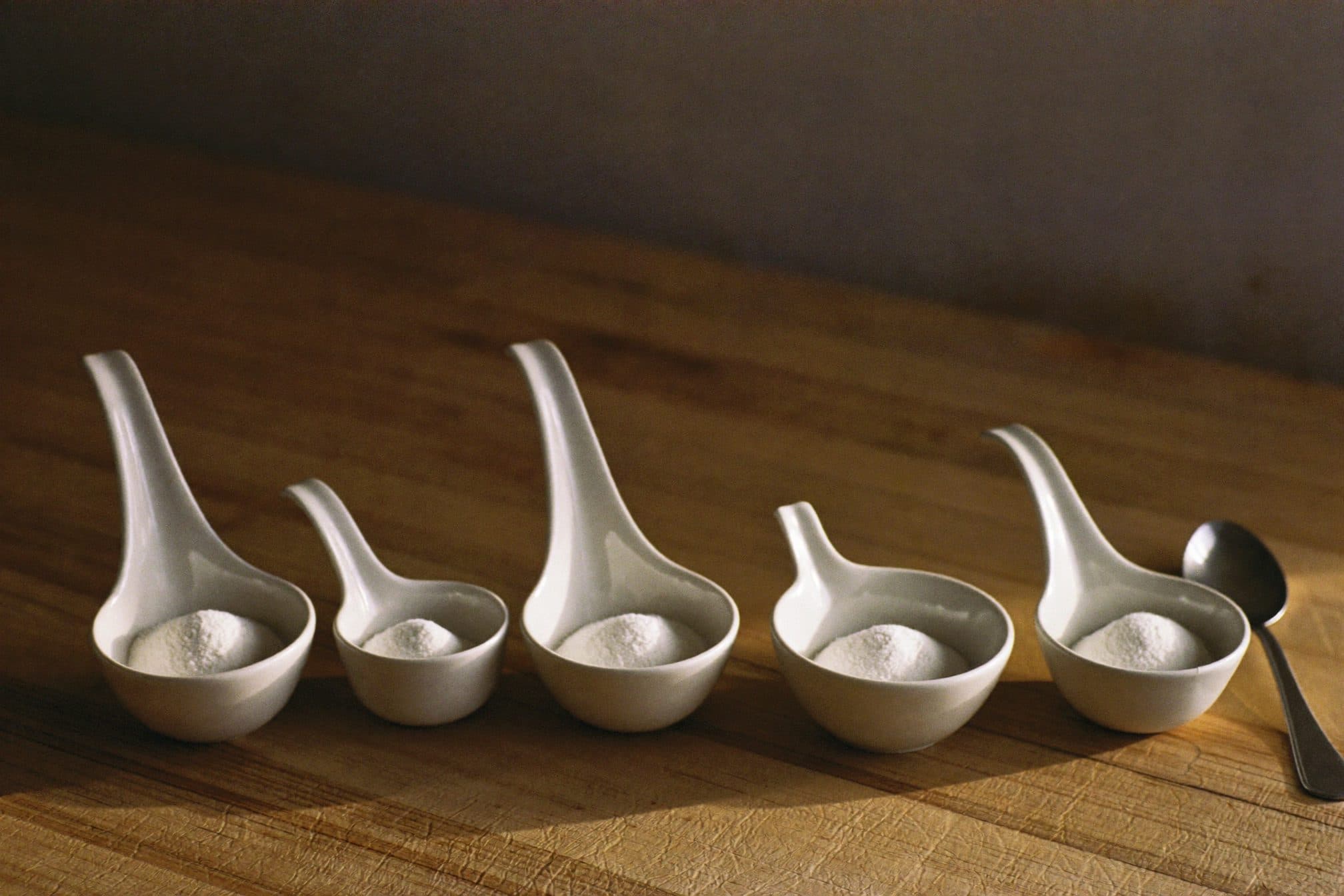
01Does creatine actually work?
Yes — pooled across 53 randomized trials, creatine beat placebo on upper-limb strength, and the modest edge keeps showing up [3].
Your muscles already run on creatine — a normal diet supplies 1–2 g a day and keeps stores roughly 60–80% full [1]. A daily dose tops off the tank: muscle creatine and phosphocreatine rise another 20–40% [1]. That rise is the mechanism the ISSN credits for the performance effects [1].
The depth of the file is the story. The ISSN position stand calls creatine monohydrate the most effective ergogenic supplement — the word just means performance aid — available to athletes for increasing high-intensity exercise capacity and lean mass during training [1]. Pooled across 53 randomized trials, it beat placebo on upper-limb strength no matter the population, the training plan, the dose, or the trial length [3]. The edge is modest — and it keeps showing up. Boring is the compliment.
02How much creatine per day?
3–5 g of creatine monohydrate a day is the whole protocol; stores fill in 3–4 weeks, and a loading week only gets you there faster [1].
3–5 g of creatine monohydrate, daily, is the entire protocol. Taken at that dose, muscle stores fill over 3–4 weeks and stay full for as long as you keep taking it [1].
Loading — 5 g four times a day for 5–7 days — is the express lane, filling stores in about a week instead of a month [1]. It isn't required: smaller daily doses are effective [2]. That is exactly why the 2021 expert review calls the loading phase optional [2]. One honest caveat — most of the early performance data comes from loading studies, so the slow route's first weeks are less documented [1]. The destination is identical.
By signing up you agree to receive our emails, including occasional offers, and to the privacy policy.
03Is the water weight real?
A loading week can add about 0.5–1.0 L of water; over weeks of training there is no rise in total body water and no added fat [1][2].
Partly — and it's the least dramatic side effect in sports nutrition. Over 1,000 studies in, the only side effect that keeps getting reported is weight gain [1]. During a loading week, early studies measured about 0.5–1.0 L of short-term fluid retention, roughly in step with the weight gained [1]. Creatine is osmotically active — it pulls water along the way salt does — so some water follows it into the muscle [2].
Then it settles. Multi-week training studies show no increase in total body water [2]. The expert review's conclusions read flatly: creatine does not always lead to water retention — and it does not increase fat mass [2]. A small early step-up on the scale is stored fuel and water, not fat — nothing your maintenance-calorie math needs to answer for. Expected, bounded, fine.
04Is creatine bad for your kidneys?
At recommended doses, the evidence shows no kidney damage in healthy adults — the word healthy is the boundary [2].
For healthy adults, the record is long and dull — the good kind of dull. The 2021 evidence review states it plainly: at recommended dosages, creatine does not result in kidney damage or renal dysfunction in healthy individuals [2]. One study looked at athletes who had taken creatine for anywhere from 10 months to 5 years [4]. Their kidney markers — creatinine, urea, albumin — matched non-users, and glomerular filtration, the kidneys' cleaning rate, was normal in both groups [4].
The boundary is the word healthy. Every finding above was built in people with normal kidney function. If your kidneys come with a diagnosis, this isn't your breakdown — it's a conversation with your clinician.
05Which creatine should you buy?
Buy plain creatine monohydrate powder — it is the form behind nearly all the research, and claims for fancier forms are unfounded [1][2].
Plain creatine monohydrate powder — the cheap tub with one ingredient on the label. Claims that other forms degrade less in the body or reach muscle better are, in the position stand's words, currently unfounded [1]. The 2021 review goes further: evidence-based research clearly shows creatine monohydrate to be the optimal choice [2]. Monohydrate is also the form behind nearly all of the research — the safety record belongs to it.
Skip the pre-mixed liquids while you're at it. Creatine isn't stable once mixed in liquid [2]. Efforts to build a shelf-stable ready-to-drink at effective doses have been unsuccessful [2]. Powder in water, same day, done.
And the incentive check, because this is a supplement article: we sell nothing. No powder, no discount code, no affiliate anything. Pair this with the protein-math breakdown and the supplement-aisle conversation is, for most people who train, over.
Do you have to load creatine?
Does creatine cause hair loss?
General-audience information — not medical advice. Creatine's safety record above was built in healthy adults — if you have a kidney condition or take medication that affects the kidneys, run it past your clinician or pharmacist first. How we source and verify. No affiliate links in this breakdown. Last updated 2026-09-05.
Protein math for people who cook twice a week
The daily target, split across meals you'll actually eat. Plain numbers, no powder required.
4 min · September 5, 2026TrainingMuscle after 40: how fast it goes, and the minimum that keeps it
The drift is measured, and the floor is cheap: what the sarcopenia literature says about loss per decade — and the smallest weekly dose with a documented effect.
5 min · September 5, 2026