
Sauna has the strongest long-term signal. In 2,315 Finnish men followed ~21 years, 4–7 sessions a week tracked with far fewer sudden cardiac deaths — a cohort finding, not a trial. Cold water helps soreness modestly, costs strength gains when it follows lifting, and its fat-loss story is still mechanistic. Care in that order — after the recovery basics: sleep, food, and training.
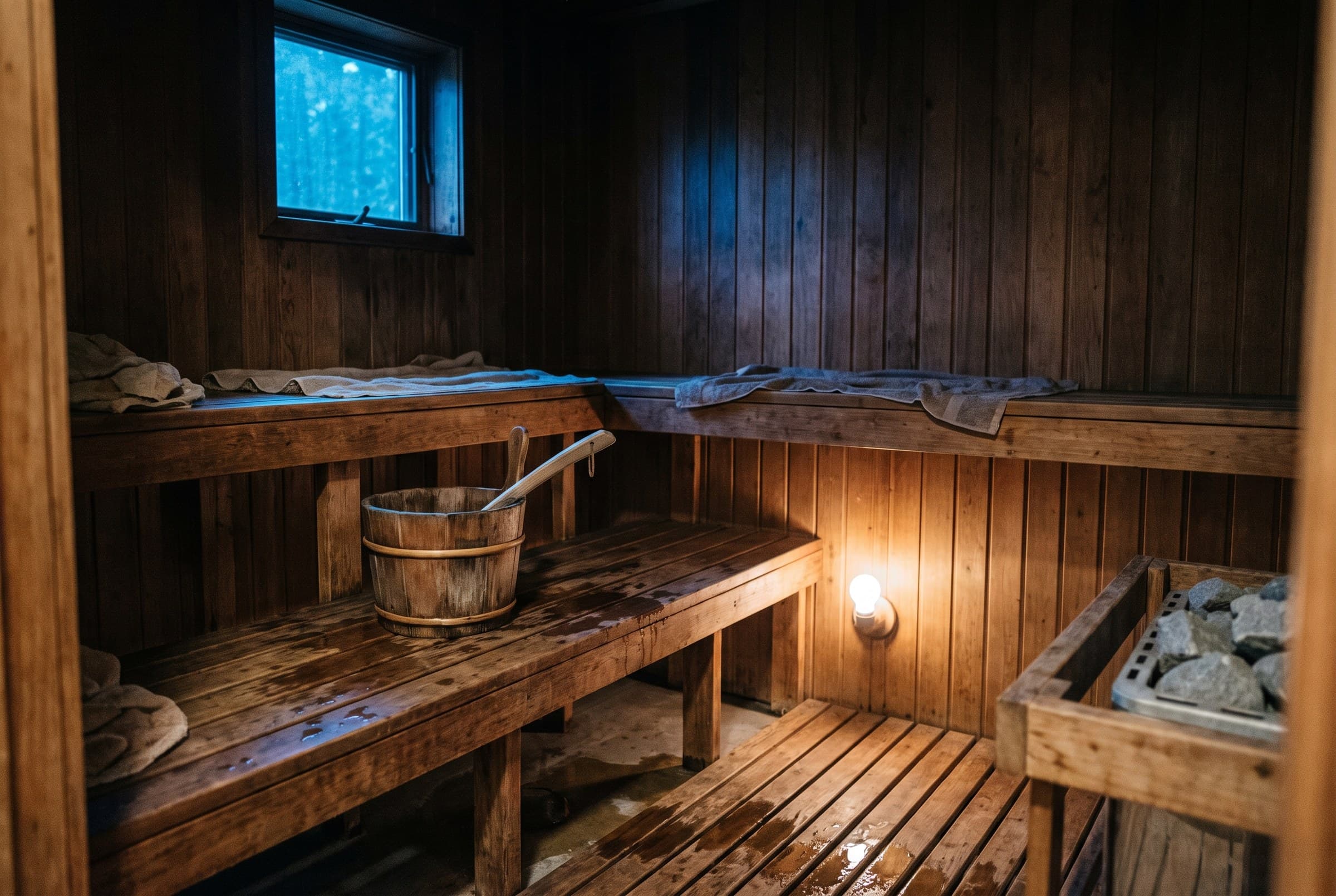
01What does the evidence actually say about sauna?
The best heat data is a 21-year Finnish cohort: 4–7 saunas a week tracked with far fewer sudden cardiac deaths — a link, not proof [1].
The load-bearing dataset is Finnish: 2,315 men aged 42–60, sauna habits recorded at baseline, then followed for a median of 20.7 years [1]. Men taking 4–7 saunas a week had roughly a third the rate of sudden cardiac death of once-a-week men, after adjustment for cardiovascular risk factors [1]. The raw numbers ran the same way for deaths from any cause: 49.1% of the once-a-week group died during follow-up, versus 30.8% of the frequent-sauna group [1]. Session length mattered too: over 19 minutes tracked with about half the sudden-death rate of under 11 [1].
Now the honest part: this is a cohort, not a trial. Nobody was assigned to sauna. Middle-aged Finnish men who sauna most days differ from those who don't, in ways no adjustment fully captures. The study can't say heat caused any of it. What it can say — a link this large, this dose-shaped, over two decades — is more than any recovery gadget on your feed can say.
02Does cold water actually help you recover?
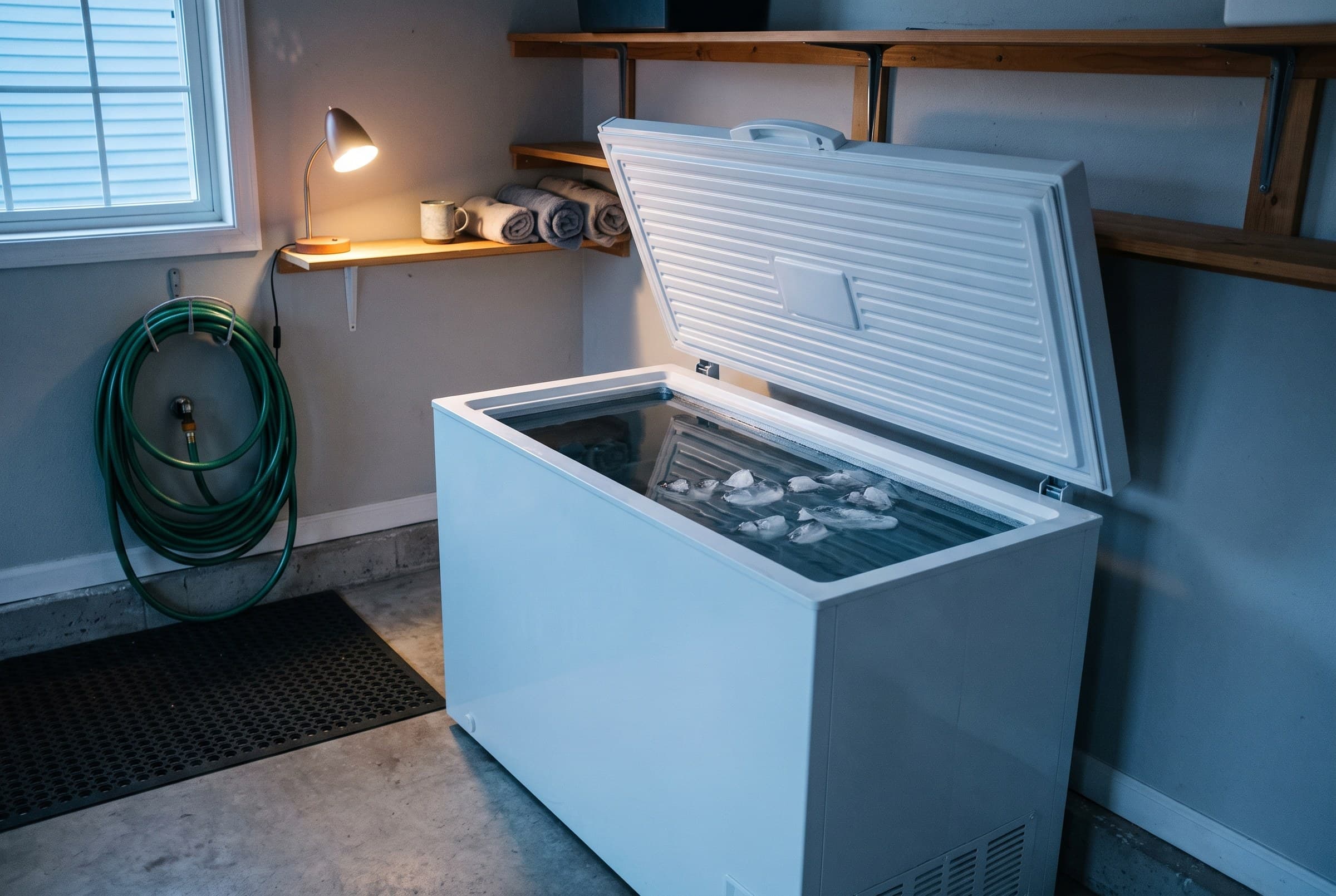
Cold water does ease next-day soreness — a real but modest effect across 17 small trials, with no clear edge over warm baths [2].
For soreness, yes — modestly. The Cochrane review pooled 17 small trials, 366 people in total [2]. A cold plunge after exercise eased muscle soreness versus rest, with effect sizes from 0.55 at 24 hours to 0.93 at 72 hours [2]. The reviewers' own caveats: study quality was low, results were mixed, and cold showed no clear edge over contrast baths or warm water [2]. So the plunge does something real for how your legs feel tomorrow. It is not the something the price tag implies.
By signing up you agree to receive our emails, including occasional offers, and to the privacy policy.
03When does the cold plunge cost you gains?
In the flagship trial, a cold plunge right after lifting cut muscle growth by roughly two-thirds — keep it hours away from strength work [3][4].
When it lands right after lifting. This site's recovery hierarchy already covers the flagship trial. Over 12 weeks, lifters who followed training with cold immersion gained about 103 g of quadriceps mass, versus about 309 g with easy cycling — roughly two-thirds of the growth lost [3]. Type II muscle fibres grew about 17% with active recovery and showed no significant growth with the plunge [3]. The pooled data agrees: across controlled studies of regular cold-water immersion alongside training, strength outcomes came out worse with the plunge — a standardized effect of 0.60 in the wrong direction [4]. Endurance outcomes showed no effect either way [4].
The mechanism and the marketing are the same thing: cold blunts the inflammatory signal. After a hard session, part of that signal is the adaptation you trained for. If you lift for strength, keep the plunge hours away from the barbell — or on days it never saw one.
04Does cold exposure boost your metabolism?
The brown-fat story rests on small physiology studies of adapted winter swimmers, with no fat-loss outcome measured — a lead, not a result [5].
This is the podcast segment, so here is its actual evidence base. A Danish group studied young men who winter-swim (with sauna) 2–3 times a week [5]. Compared with controls, the swimmers made more heat when cold, and showed signs of both cold and heat acclimation [5]. The authors proposed winter swimming as a potential strategy for increasing energy expenditure [5]. Proposed, that is, in a small physiology study of already-adapted enthusiasts, with no fat-loss outcome measured [5].
That's the whole load the claim can bear. Shivering in a barrel burns some extra calories; so does a brisk walk, without the ritual. If cold works for you as a mood tool or a discipline anchor, fine — that's a real reason. Metabolism is not yet one.
05So what order should you care?
Sleep, food, and training do the recovering; sauna holds the strongest long-term signal [1], and cold belongs where it can't tax the lifting [3][4].
Ranked by what the literature can currently carry:
None of this outranks the boring tier: sleep, food, and the training itself do the recovering. If those are handled and you enjoy the heat, the Finnish data is a decent reason to keep the sauna habit. If you enjoy the cold, schedule it where it can't tax the lifting. And if you enjoy neither, the evidence contains no obligation to start.
Is sauna worth it if I can only go once or twice a week?
When should I take the ice bath if I lift?
Sauna or cold plunge — if I had to pick one?
General-audience information — not medical advice. Heat and cold are real physiological stressors. If you have a heart condition, are pregnant, take medication that affects blood pressure or heat tolerance, or have any doubt about either, talk to a clinician who knows your history before adopting a sauna or immersion habit. This page is general education only. How we source and verify. No affiliate links in this breakdown. Last updated 2026-09-05.
The recovery hierarchy, ranked
Where sleep, food, massage, and the cold plunge actually land — ranked by evidence, not by feed.
5 min · September 5, 2026RecoverySore or hurt? What DOMS is, and when pain means stop
The soreness schedule, why the first session back bites hardest, and the plain difference between sore and hurt.
5 min · September 5, 2026